Syrian Kurds urge Iranian Kurds not to become allies of the US

Kurdish residents of north-eastern Syria have warned Iranian Kurds against allying with the United States in the fight against the Iranian government. They said their experience of working with Washington in Syria showed the risk of being left without support.
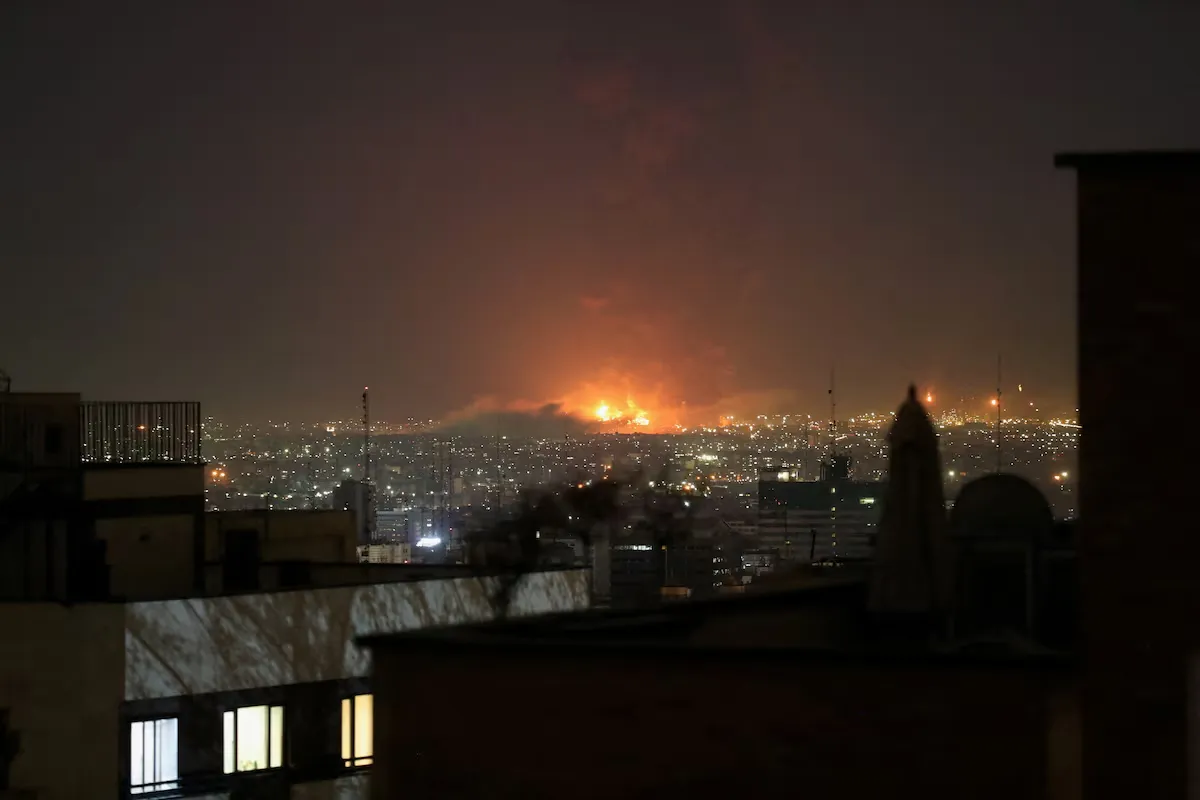
Iranian Kurdish armed groups based in northern Iraq have recently held consultations with the United States on possible attacks on security forces in western Iran. This was previously reported by Reuters. The talks took place against the backdrop of air strikes on Iran carried out by the United States and Israel.
Saad Ali, a resident of the Kurdish city of Qamishli in north-eastern Syria, said that the Kurds of Iran should not rely on Washington's support.
"I hope that the Kurds of Iran will not form an alliance with America, because it will abandon them," he said.
"Tomorrow, if an agreement is reached between them and the Iranians, they will destroy you. Don't repeat our mistakes," he added.
More than ten years ago, Kurdish forces in Syria cooperated with the United States in the fight against the Islamic State. After that, they created a semi-autonomous territory on lands previously controlled by militants.
In January, the new Syrian army, led by President Ahmed al-Sharaa, took control of most of the territories that were under the control of Kurdish forces during a large-scale offensive. The Kurds of Syria appealed to the United States to intervene, but Washington called on them to unite with Ahmed al-Sharaa's troops.
Amjad Kardo, a resident of Qamishli, said that this experience was an important lesson for the Syrian Kurds. "In my opinion, the Kurds in Iran must take a firm stance: they will not participate in any wars on Iranian territory without firm, signed guarantees from the United States regarding the future of these Kurdish regions in Iran," he said.
"In particular, we, the Kurds in Syria, have had negative experiences with the Americans in Syria and their refusal to support Kurdish resistance movements," he added.
A source among the Iranian Kurds reported that their leaders are also expressing concern about the possibility of being left without support, similar to the Kurdish forces in Syria. According to the source, representatives of the Iranian Kurds have asked the United States to provide guarantees, without specifying their content.
US President Donald Trump told Reuters on Thursday that it would be "great" if Kurdish forces crossed the border from northern Iraq into Iran. At the same time, he did not answer the question of whether the United States would provide air support in the event of such a move.
On Saturday, Donald Trump told reporters that he did not want Kurdish fighters to cross into Iranian territory.
Ahmed Barakat, head of the Kurdish Progressive Democratic Party in Syria, said that Iranian Kurdish forces should act with extreme caution.
He noted that the final decision remains with them, but in his opinion, participating in the confrontation with the Iranian authorities at the invitation of the United States is not currently in the interests of the Kurds of Iran.
Last week, Reuters reported that Israel has been negotiating for about a year with Iranian Kurdish rebel groups based in the semi-autonomous region of Iraqi Kurdistan.
The Kurds are an ethnic community that was left without a state after the collapse of the Ottoman Empire. Most of them are Sunni Muslims and live in a mountainous region covering parts of Armenia, Iraq, Iran, Syria and Turkey.
In Iraq, Kurds inhabit three northern provinces that have their own regional government. In other countries, particularly Iran, Turkey and Syria, the idea of creating autonomy or a state for the Kurds has not yet been realised.