The IMF has called on governments to prepare for unpredictable consequences due to the conflict in the Middle East.

International Monetary Fund Managing Director Kristalina Georgieva said that prolonged fighting in the Middle East could affect financial markets and the economy, as well as create new challenges for governments.
She made the remarks on Monday during a symposium in Tokyo, Bloomberg reported.
According to her, if the conflict drags on, it could affect market sentiment, economic growth and inflation, and create new demands on government policy.
"If the new conflict proves to be protracted, it has clear and obvious potential to affect market sentiment, growth and inflation, placing new demands on policymakers," Kristalina Georgieva said.
She also noted that even after the conflict ends, new shocks could arise, indicating continued uncertainty.
"In this new global environment, think about the unthinkable and prepare for it," she added.
Kristalina Georgieva noted that countries need to put their domestic economic policies in order to be able to respond to possible shocks.
Her statement came after a sharp rise in oil prices. On Monday, prices rose to nearly $120 per barrel amid escalating tensions in the Middle East and growing concerns over oil transport routes and global energy infrastructure.
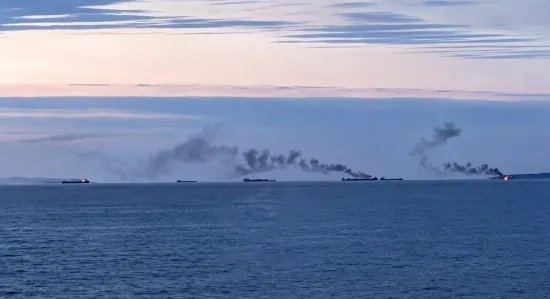
The United Arab Emirates and Kuwait joined Iraq in cutting oil production on Sunday. At the same time, storage facilities are filling up quickly due to the effective closure of the Strait of Hormuz.
Kristalina Georgieva reported that shipping volumes through the Strait of Hormuz have fallen by 90 per cent. Approximately one-fifth of the world's oil supplies and LNG trade pass through this strait.
She noted that about half of Asia's oil imports and about a quarter of the region's LNG imports pass through the Strait of Hormuz. For Japan, this route provides nearly 60 per cent of oil supplies and 11 per cent of LNG supplies.
US President Donald Trump also commented on the rise in oil prices in a post on the social network Truth Social. He said that the short-term price increase was a "very small price to pay."
According to him, prices will quickly fall "once the nuclear threat from Iran is eliminated."
Kristalina Georgieva also outlined the possible economic consequences of the energy shock. According to her, a 10 per cent increase in energy prices over the course of a year could raise global inflation by 40 basis points and slow economic growth.
The International Monetary Fund will present a more detailed analysis in its next World Economic Outlook report, which is scheduled for publication in April.
Kristalina Georgieva called on governments to strengthen public institutions and economic policies to increase the resilience of economies and private sector development.
She also suggested using available economic policy tools when necessary, provided that countries subsequently rebuild their financial reserves.
In Japan, which is about 90 per cent dependent on oil imports from the Middle East, rising oil prices combined with a weakening yen are increasing the risk of stagflation. This could force the government to increase budget spending and complicate the central bank's attempts to normalise monetary policy.
"You have control over your domestic policy. You can prepare your country for these shocks," said Kristalina Georgieva.