‘Mykolaivvodokanal’ is hiring debt collectors: lawyers have explained whether this is legal

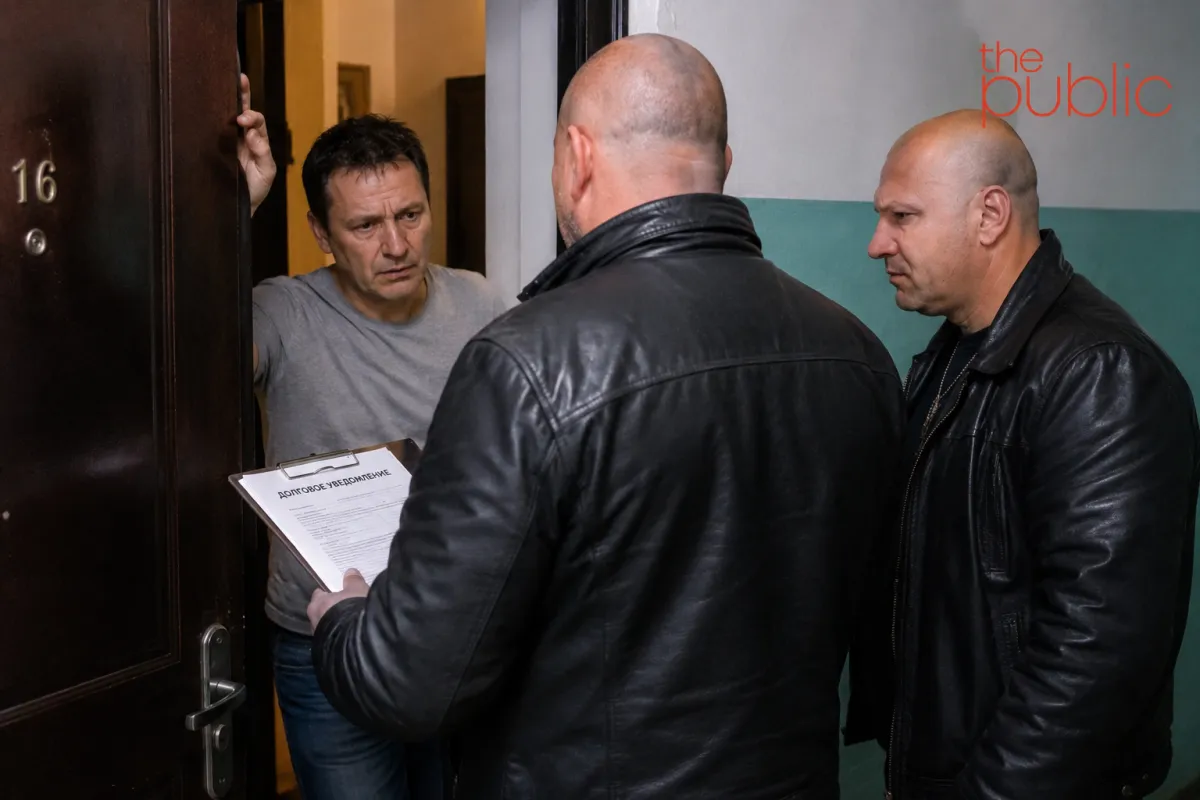
Exclusive comments were provided to ThePublic by Dina Dryzhakova, a lawyer and head of the ‘Prima Leader Group’ law firm, and Anna Daniel, a lawyer, candidate of legal sciences and managing partner of the ‘Anna Daniel’ law firm.
The day before, ThePublic reported that the municipal enterprise ‘Mykolaivvodokanal’ had announced a tender worth 1.24 million hryvnias to engage a debt collection agency. The plan is to transfer to the contractor the task of handling claims relating to water supply and sewerage debts totalling 6.2 million UAH.
Following the publication, the editorial team received questions from readers: does the municipal enterprise have the right to hire debt collectors, is it lawful to pass on subscribers’ personal data to them, and what rights do consumers retain?
To find the answers, ThePublic sought clarification from two independent lawyers.
Is it lawful for a municipal utility to hire debt collectors?
Both experts note that current legislation does not contain an explicit ban on utility companies entering into contracts with private firms for pre-litigation debt recovery.
According to Anna Daniel, this is not a matter of transferring the right to collect debts, but of engaging a third party to handle claims.
“Utility companies have the right to enter into contracts with third parties for the provision of legal or information services, in particular for the pre-litigation settlement of debts. This is considered the outsourcing of debt recovery work,” Anna Daniel explained to ThePublic.
The lawyer notes that this possibility stems from the provisions of the Civil Code of Ukraine, which regulates service contracts and agency agreements.
At the same time, the powers of such companies remain strictly limited.
“A debt collection agency has no right to carry out enforcement measures — such as seizing property, freezing accounts or taking any enforcement action. This can only be done by the State Enforcement Service or private enforcement agents, and only following a court ruling,” she emphasised.
Why debt collectors for utility debts differ from those for bank loans
One of the key legal distinctions is that debts for housing and utility services and bank loans are governed by different regulations.
In 2021, the so-called ‘anti-debt-collection law’ – Law No. 1349-IX – came into force in Ukraine, establishing strict rules governing the operations of debt collection agencies when settling overdue consumer loan debts.
However, as the lawyers explain, debts for water supply, sewerage or other housing and utility services are not consumer loans.
“Debts for utility services are not consumer loans. Therefore, the NBU does not directly regulate or fine debt collectors for breaching the rules governing the handling of utility debts,” noted Anna Daniel.
However, this does not mean that such companies can operate without oversight.
According to the lawyer, they are obliged to operate in accordance with the requirements of the Law of Ukraine ‘On the Protection of Consumer Rights’, the Civil Code of Ukraine and the Criminal Code of Ukraine.
Dina Dryzhakova also draws attention to another important point.
“There is no specific law that would explicitly prohibit water utilities from hiring companies to deal with debtors. At the same time, Law No. 2456-IX imposes certain restrictions on the enforced recovery of debts for housing and communal services in areas where hostilities are taking place or have taken place. However, pre-litigation notification of debtors is not expressly prohibited,” the lawyer explained.
This refers to Law No. 2456-IX.
The most questions arise regarding personal data
It is precisely the transfer of information about debtors to a private company that, in the opinion of both lawyers, may become the most contentious issue.
Anna Daniel believes that without a proper legal basis, such a transfer may contravene the law.
“The transfer of a debtor’s full name, telephone number, address and amount owed to a third-party private company without the debtor’s explicit consent may constitute a direct breach of personal data protection legislation. The only lawful way to transfer data without consent is for the company to apply to the court or to transfer the materials to an enforcement agent on the basis of a court order,” the lawyer noted.
She points out that the procedure for processing personal data is set out in the Law of Ukraine ‘On the Protection of Personal Data’.
At the same time, Dina Dryzhakova points out that the situation depends on the terms of the contract between the company and the consumer.
“When a consumer enters into a water supply contract or becomes a party to a public contract, it often contains a clause consenting to the transfer of personal data to third parties for the purposes of billing and debt recovery. If such consent exists, the transfer may be lawful. If there is no contract or the consent has been withdrawn, this may constitute a breach of the law.”
According to the lawyer, even where such consent exists, the company must only transfer the minimum amount of information necessary.
“The transfer of telephone numbers, particularly if they were not specified by the consumer themselves in a written contract, or the transfer of data relating to third parties — such as relatives or neighbours — constitutes a serious breach of the law.”
What to do if debt collectors call
Both lawyers advise against rushing to discuss the debt over the phone and to first check exactly who is calling.
According to Anna Daniel, the first step is to record the conversation, ask the caller to introduce themselves, state the name of their company, explain the reason for the call and specify the contract under which they are acting on behalf of the utility company.
“Ask for the name of the company, the operator’s full name, the reason for the call and the contract number between the utility company and this company,” the lawyer recommends.
Dina Dryzhakova emphasises that consumers have every right to request documents confirming the debt collection agency’s authority.
“I do not know you. Please send me an official written notice with certified copies of the contract between you and the municipal utility ‘Mykolaivvodokanal’, as well as documents confirming your authority. Until these documents are received, the person has the right not to continue the conversation,” the lawyer explained.
Anna Daniel also points out that a person may refuse to communicate by telephone altogether.
“A consumer may officially state: ‘I refuse to communicate with your company. Please resolve all issues directly with the water utility or through the courts.’ Debt collectors have no legal standing; their calls constitute voluntary communication, which a person is free to refuse,” she noted.
Where to turn in the event of threats or pressure
If representatives of a debt collection agency make threats, exert psychological pressure or use unlawful methods of influence, lawyers advise recording all conversations and messages.
According to Anna Daniel, depending on the situation, provisions of the Criminal Code of Ukraine may apply, in particular:
- Article 189 — extortion;
- Article 355 — coercion to fulfil civil-law obligations.
If the issue concerns the unlawful use of personal data, the lawyer recommends contacting the Verkhovna Rada Commissioner for Human Rights.
Dina Dryzhakova adds that if a company is listed in the NBU’s register as a debt collection agency, citizens may also lodge a complaint with the National Bank regarding breaches of ethical standards.
Why does the water utility not use its own legal department?
According to the lawyers, this decision may be due to the heavy workload.
To recover thousands of small debts, it is necessary to prepare a significant number of claims or applications for court orders, pay court fees and monitor each case.
‘To recover debts from thousands of small-scale customers, thousands of statements of claim or applications for court orders need to be prepared. An in-house legal department often physically lacks the resources to handle such a massive volume of technical work — phone calls, correspondence and the preparation of claims. That is precisely why companies often outsource their claims work,” explained Anna Daniel.
Dina Dryzhakova agrees that the utility company will most likely justify the procurement by citing the need to optimise the work of its legal department and a desire to resolve the matter out of court first.
Is spending 1.24 million hryvnias justified?
The lawyers also commented separately on the economic viability of the procurement.
As a reminder, the expected cost of the services is 1.24 million UAH, whilst the amount of debt planned to be handed over to debt collectors is 6.2 million UAH.
Anna Daniel notes that such a commission is in line with average market rates.
“The 20% commission is the standard average rate in the debt collection and legal services market in Ukraine. From a business perspective, recovering 80% of bad debt could be profitable.”
At the same time, she emphasises that the terms of the contract will be of key importance.
“It is critically important for a municipal enterprise that the tender documentation clearly stipulates: payment is made as a percentage of the funds actually recovered, rather than as a fixed sum simply for carrying out the work. If the contractor receives 1.24 million hryvnias regardless of the outcome, this could trigger an audit by the State Audit Service into the effective use of funds.”
Dina Dryzhakova also notes that it is the terms of the future contract that will determine whether the use of the community’s funds can be considered economically sound.
On 22 June, the municipal enterprise ‘Mykolaivvodokanal’ announced a tender to engage a debt collection agency to deal with residents’ arrears for water supply and sewerage services.
The estimated cost of the procurement is 1.24 million UAH. The contractor is set to be entrusted with debt recovery work amounting to 6.2 million UAH.
As of 1 May 2026, consumers’ total arrears to the company stood at almost 258 million UAH.
Follow us on Telegram