Digitisation of employment records: the Pension Fund of Ukraine explains whether this is mandatory

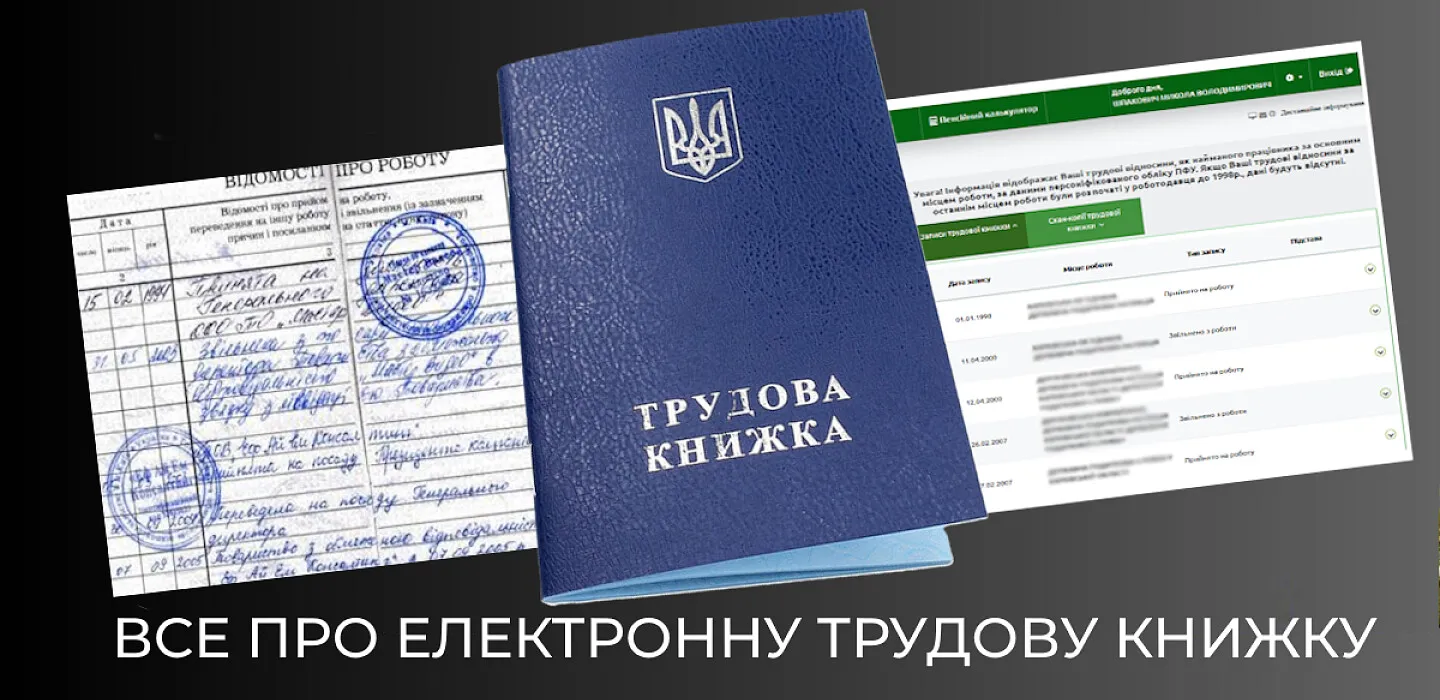
This was stated by Oleksandr Maletskyi, the Pension Fund of Ukraine’s board member responsible for digitalisation.
In Ukraine, digitising one’s employment record book is not a mandatory procedure. If a person has not submitted their details in advance, the Pension Fund will still take paper documents into account when processing their pension.
The PFU explains that there are no fines or other penalties for not having an electronic employment record book. At the same time, digitisation can help avoid delays and problems with confirming length of service.
Since 2021, the main source of information on employment history has been the electronic Register of Insured Persons. It is this data that is now used to calculate pensions.
The paper employment record book has not been abolished. It serves a supplementary function and effectively duplicates the information from the electronic system.
The Pension Fund of Ukraine explains the switch to an electronic format by citing data quality. Paper employment record books often contained errors in entries, inaccuracies in company names, missing information, and varied formats of record-keeping.
In contrast, employers submit electronic data alongside their official reports, and the system automatically verifies it.
The main issue concerns employment history prior to 2000. The electronic register contains data from around that period, so information about employment before 2000 was not automatically included.
This is precisely why the digitisation of paper employment record books is necessary – to add employment history from previous years to the register.
Without digitisation, part of the employment history may not appear in the system by the time a pension is applied for. In such cases, the Pension Fund will accept the documents when the person applies for a pension and enter the data into the register.
However, this process may be delayed due to additional checks.
The Pension Fund advises those with significant service records prior to 2000, errors or inaccuracies in their employment record book, missing documents, or who plan to retire in the near future not to delay digitisation.
In such cases, it is better to check the records in advance and enter all the data to avoid unnecessary bureaucracy when applying for a pension.
Given the state of war, the government is considering extending the transition period for digitising documents.
At the same time, experts advise against delaying this process, as an electronic employment record book allows for faster pension processing and reduces the risk of issues with confirming employment history.
By June 2026, information on employment history must be converted to electronic format. After that, paper employment record books will gradually lose their legal validity.
Previously, it was also explained who should submit scanned copies of their employment record book and how, what documents are required for this, how to check for the existence of an electronic employment record book, and how to have work experience gained before 2004 recognised.
As reported by ThePublic, Ukrainians retiring on old-age pensions in 2026 may not have their entire work history from the Soviet era credited. This depends on which specific republic of the former Soviet Union the person worked in and whether they receive a pension from that state.
Follow us on Telegram