Sale of medicines at petrol stations and post offices: the main risks of the new initiative have been identified
Oleg Klimov, Chairman of the Board of the All-Ukrainian Pharmaceutical Chamber and a member of the Council of the International Pharmaceutical Federation (FIP), made this statement in an interview with OBOZ.UA.
According to the expert, despite Ukraine’s efforts to harmonise its legislation with EU standards, current initiatives to liberalise the pharmaceutical market differ significantly from the practices of EU member states.
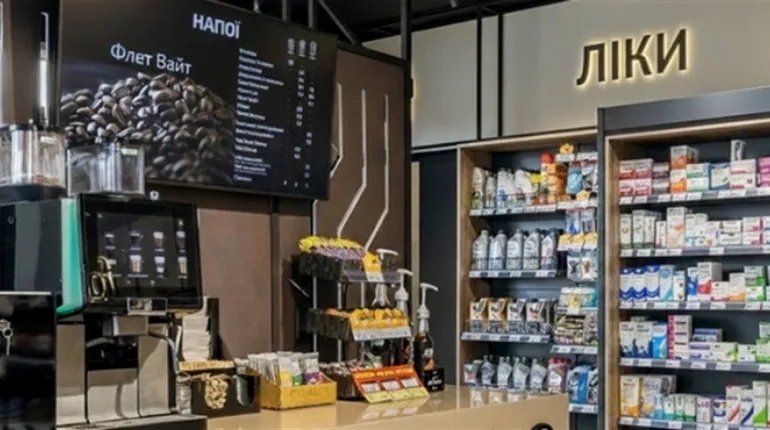
Klimov notes that in European countries, the sale of medicines outside pharmacies is a strictly regulated process. In particular, petrol stations are permitted to sell a limited list of medicines in special small-format packaging.
“In the European Union, the sale of medicines specifically at petrol stations is limited to a short list of 25–30 items. The second very important point is the limited number of tablets per pack. The third is that a warning is displayed in large letters to the buyer stating that a certain dose must not be exceeded,” explains the expert.
He emphasised that in Ukraine, over-the-counter medicines are sold in standard packs, which, in the absence of professional advice from a pharmacist, creates risks of accidental overdose and serious side effects.
In particular, the uncontrolled use of popular painkillers can lead to liver damage or gastric bleeding.
“The pharmacist is the final safeguard against a patient, God forbid, receiving substandard or the wrong medication. The final safeguard in the healthcare system. Here, that safeguard has been removed; there is no doctor here at all,” Klimov stressed.
The head of the Pharmaceutical Chamber paid particular attention to the issue of logistics via post offices.
According to him, in the EU, the post office operates solely as a delivery service: the patient pays for the order online at a licensed pharmacy, and the postal operator merely transports the goods.
In Ukraine, however, according to the expert, a “quasi-model” is being created where post offices effectively become points of sale, which complicates quality control and storage.
He also expressed concern over the lack of specific storage conditions for medicines at petrol stations and the absence of authorised personnel at each point of sale, which could lead to a loss of efficacy due to improper temperature control.
Over-the-counter sale of medicines: what is known
In December 2025, the Cabinet of Ministers amended the licensing conditions, allowing petrol station chains to sell over-the-counter medicines.
In March 2026, the government formalised these regulations and resolved certain inconsistencies with the legislation. By the middle of the month, the first petrol stations had received licences to sell medicines.
The Ministry of Health emphasises that the new format applies exclusively to over-the-counter medicines, the use of which consumers can decide on independently – in line with established practice in EU countries.