The village where half a hundred women killed their husbands - BBC

Inna Kramarchuk
Inna Kramarchuk Journalist
The village where half a hundred women killed their husbands - BBC

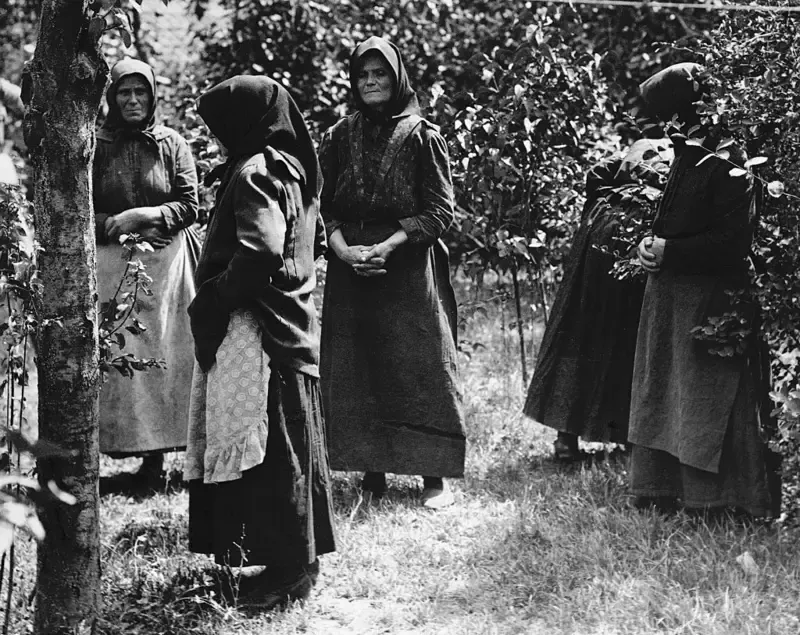
на фото: Група жінок, яких звинуватили у вбивстві, стоять у саду своєї імпровізованої в'язниці в Надьреві у 1929 році (www.bbc.com)
In December 1929, a trial took place in Hungary: the case concerned the village of Nádreví, where dozens of women were accused of deliberately poisoning their husbands.

The New York Times newspaper at that time reported that nearly 50 women were accused of poisoning men in the community. The newspaper noted that between 1911 and 1929, over fifty men in Nadyrév, a farming settlement about 130 kilometers south of Budapest, were killed with arsenic, according to thepublic.info citing BBC Ukraine.

Some of the accused women were executed, others imprisoned. During the trial, one name was repeatedly mentioned - Zuzanna Fazekash, a village midwife. In total, according to some estimates, women in this region could have killed up to three hundred men.

Life in Nadyrév

Nadyrév is a small rural community near the Tisza River in Hungary's largest wine-growing region - Kunság. Marriages in this area were often arranged: very young women were married off to much older men. Such arrangements usually involved contracts regarding land, inheritance, and legal obligations. Divorce was impossible. The start of the poisonings dates back to a period when the village was still under the rule of the Austro-Hungarian Empire.

There were no local doctors or priests in Nadyrév, and Fazekash, thanks to her knowledge in medicine and pharmacy, was not only a midwife but also effectively a doctor.

"Thanks to her knowledge, people trusted her and turned to her," says Maria Gunya, who spoke with BBC in 2004. Gunya was still a young girl when her father, a local official, was asked by the police to help investigate a series of unexplained deaths in the village.

The midwife lived in a typical single-story house with windows facing the street. Gunya explained that women in the village often turned to Fazekash with their problems.

"She heard many stories about what was happening in families: men beating women, raping them, many of them being unfaithful. There was a lot of violence," recalls Gunya. She added that when women complained about drunken or aggressive men, Fazekash told them: "If there's a problem with him, I have a simple solution."

This solution was arsenic, which the midwife prepared by infusing a sticky fly strip in water. Later, according to the British newspaper The Times, bottles of poison were found buried in her garden.

Arrest

Over the years, the village cemetery began to fill up: between 1911 and 1929, about 50 men were buried in Nadyrév's cemetery. Most of them had wives and children. Eventually, authorities suspected something was wrong and began exhumations. Of the 50 bodies examined, 46 contained arsenic, confirming suspicions of poisoning.

All evidence pointed to Fazekash. On July 19, 1929, the police came to her house to arrest her.

"When she saw the gendarmes approaching, she realized it was the end. By the time they reached the house, she was already dead — she had drunk her own poison," recalls Gunya.

The first deaths

The first murders occurred in 1911, the same year Fazekash settled in the village. This year marked the beginning of a series of poisonings that lasted nearly two decades. But the midwife, it seems, was not the only culprit. In the neighboring town of Solnok, in 1929, 26 women stood trial. Eight received death sentences, the rest went to prison, seven of them for life. Few admitted guilt, and their motives were never fully explained.

There are many theories about motives. Poverty, greed, and boredom are just some of them. Some reports claim that women engaged in affairs with Russian prisoners of war. They were recruited to work on farms while local men fought on the front during World War I. When the men returned, women were outraged by the sudden loss of freedom and decided to act one after another.
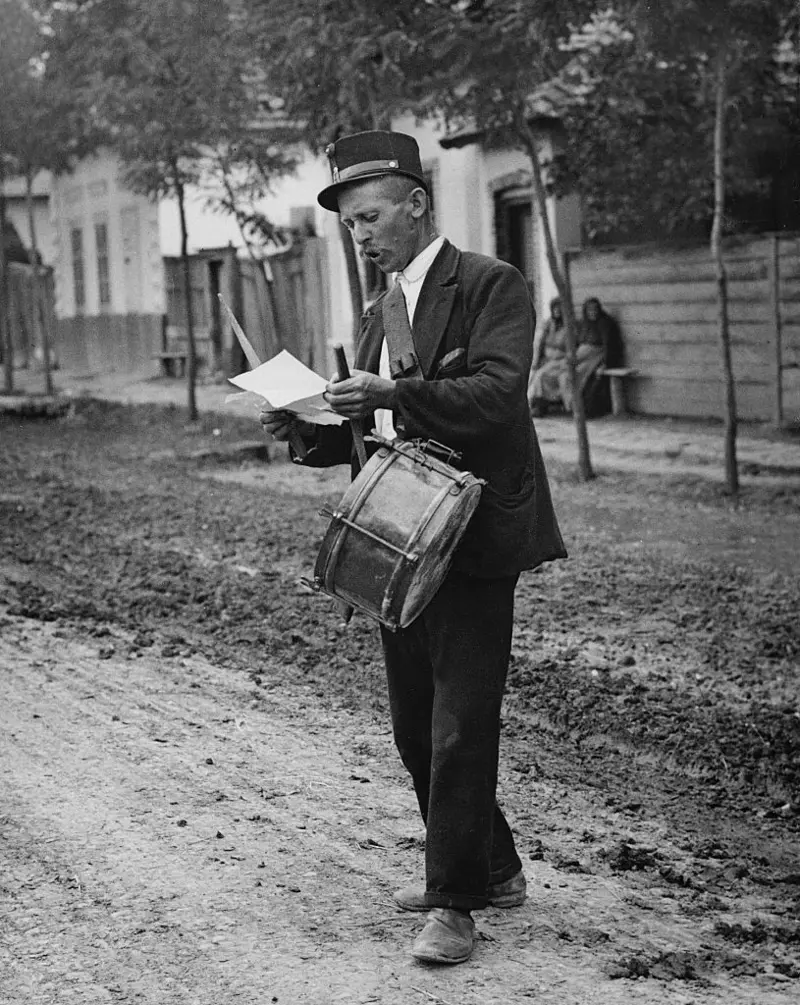
The town crier announces the ban on entering the Nadyrév cemetery in 1929 (www.bbc.com)

Beyond Nadyrév

Perhaps they were not the only ones. In the neighboring town of Tisakurt, some exhumed bodies also contained arsenic, but no one was convicted for the deaths of these people. The total number of victims in this area could have reached 300 people, according to some estimates. Years have erased most painful memories of Nadyrév. Its name no longer causes concern among men in the surrounding region.

However, Gunya ironically notes that after the poisonings, men began to treat their wives much better.


Share tittle
Society
Ani Lorak's concerts in Russia have been cancelled following accusations that she supports the Ukrainian Armed Forces
Society

Ani Lorak's concerts in Russia have been cancelled following accusations that she supports the Ukrainian Armed Forces

Ani Lorak’s concerts in cities across the Far East have been cancelled in Russia following accusations that she allegedly supports the Ukrainian military.

03.06.2026
The 50+ mobilisation in June 2026: the home front or the front line
Society

The 50+ mobilisation in June 2026: the home front or the front line

Men over the age of 50 who are liable for military service may be called up in Ukraine if they are fit for service and do not have a deferment or exemption.

03.06.2026
Sweden wants to ban social media for children under the age of 15
Society

Sweden wants to ban social media for children under the age of 15

Sweden may join the ranks of countries that restrict children’s access to social media. A government commission is proposing to introduce a minimum age of 15 for using social media, and the relevant legislation could come into force as early as 1 January 2028.

03.06.2026
Epiphanius, Onuphrius or the Pope: which church leader do Ukrainians trust?
Society

Epiphanius, Onuphrius or the Pope: which church leader do Ukrainians trust?

Most Ukrainians are not very familiar with the country’s religious leaders – but among those they do know, Metropolitan Epiphanius enjoys the highest level of trust. Kirill, Patriarch of the Russian Orthodox Church, has no trust at all in Ukraine.

03.06.2026
The ECHR has banned the automatic detention of journalists during protests
Society

The ECHR has banned the automatic detention of journalists during protests

The European Court of Human Rights has ruled that the authorities cannot automatically detain a journalist during a protest simply because they have refused to comply with a police order to leave the scene.

03.06.2026
Crime
A network smuggling men to Slovakia for $26,500 has been uncovered in Zakarpattia
Crime

A network smuggling men to Slovakia for $26,500 has been uncovered in Zakarpattia

Law enforcement officers have arrested members of a group that organised the illegal smuggling of people across the Ukrainian-Slovak border. The organisers received $26,500 from two men in return for their services.

03.06.2026
The SSU in Zakarpattia has uncovered the embezzlement of over 100 million hryvnias during the construction of protective works for an electrical substation
Crime

The SSU in Zakarpattia has uncovered the embezzlement of over 100 million hryvnias during the construction of protective works for an electrical substation

Law enforcement officers have uncovered a scheme to embezzle public funds allocated for the protection of energy infrastructure in Zakarpattia Oblast. The former head of the regional Infrastructure Restoration and Development Service is implicated in the case.

03.06.2026
A record 522 kilograms of cocaine, hidden amongst bananas, has been seized in Hungary
Crime

A record 522 kilograms of cocaine, hidden amongst bananas, has been seized in Hungary

Hungarian law enforcement officials have reported the largest cocaine seizure in the country’s history. Over half a tonne of the drug was discovered in a consignment of bananas that had arrived from Ecuador via Germany.

03.06.2026
A network involved in the production and sale of forged documents has been uncovered in the Kyiv region
Crime

A network involved in the production and sale of forged documents has been uncovered in the Kyiv region

Law enforcement officers have dismantled a large-scale operation in the Kyiv region involving the production and sale of forged documents. Fifteen people have been charged in connection with the case, and six suspects have been arrested.

03.06.2026
The SSU and the National Police have uncovered six channels for the illegal sale of captured weapons in regions across Ukraine
Crime

The SSU and the National Police have uncovered six channels for the illegal sale of captured weapons in regions across Ukraine

Law enforcement officers have shut down six underground channels for the sale of weapons and ammunition in various regions of Ukraine. As part of a special operation, the organisers of the schemes were arrested and a substantial arsenal of weapons was seized.

02.06.2026