The Ministry of Health has simplified the regulation of cannabis-based medicines in pharmacies for one year: all the details

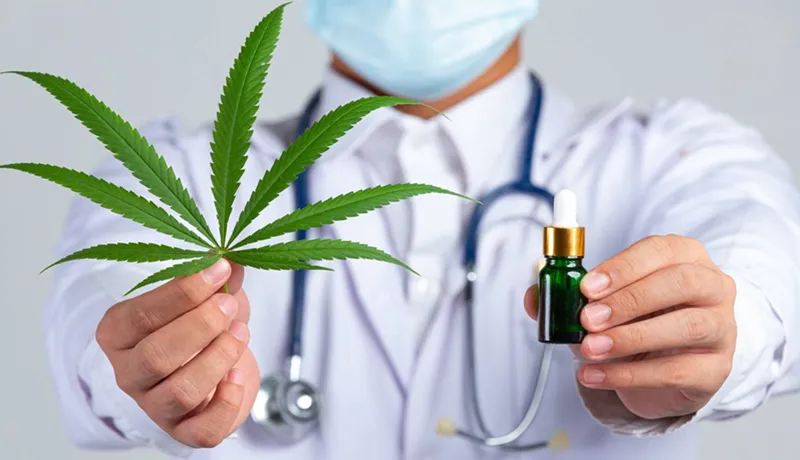
This is set out in Ministry of Health Order No. 706 of 29 May 2026, which amends the rules governing the manufacture and quality control of medicinal products in pharmacies. The document comes into force on the date of its official publication, and the one-year transition period will be counted from that date.
Which medicines are subject to simplified controls
The relaxation applies only to extemporaneous medicines which a pharmacy prepares from the plant substance cannabis without altering the form of the preparation — effectively by dispensing the raw material according to a specific patient’s prescription.
During the first year after the order comes into force, it will not be mandatory to carry out chemical testing of each such preparation directly at the pharmacy. At the same time, periodic chemical testing will continue — at least once every quarter. The remaining types of in-pharmacy checks remain mandatory.
The Ministry of Health explained the need for these changes by pointing out that herbal substances are already supplied to pharmacies with a manufacturer’s quality certificate and a laboratory analysis report. The new procedure is intended to allow manufacturing pharmacies, which do not have a full set of equipment to carry out complex chemical analyses independently, to handle such medicines.
When a full inspection remains mandatory
The simplification does not apply to medicines where the pharmacy alters the dosage form during manufacture. Such medicines must undergo all types of in-house quality control.
If an excipient is added to a herbal substance and the medicinal product is manufactured by dilution, chemical analysis is carried out periodically, but at least once a quarter. Until the results of such an analysis are received, the medicinal products do not need to be placed in quarantine; however, the pharmacy must carry out all other necessary checks.
It is prohibited to mix cannabis plant material from different batches during packaging or dilution. This is necessary to maintain the traceability of each batch and to ensure that the finished product complies with the documentation for the raw materials.
Who will be able to manufacture medicinal products
Pharmacy assistants or pharmacists may package the cannabis plant material under the supervision of a pharmaceutical analyst. If no such specialist is available, the process must be supervised by the pharmacy manager, their deputy or another authorised person.
All staff involved in the manufacture of preparations must be officially authorised to work with narcotic drugs, psychotropic substances and precursors. The pharmacy manager appoints the person in charge or the analytical pharmacist by a separate order.
How raw materials will be checked
Before use, the cannabis plant material must undergo an incoming quality control check. The pharmacy will check the accompanying documents, the manufacturer’s certificate and the laboratory’s report confirming that the raw materials comply with the approved specification or the requirements of the State Pharmacopoeia of Ukraine.
If the pharmacy does not have its own facilities to carry out the necessary analysis, samples may be sent to an accredited laboratory specialising in the quality control and safety of medicinal products.
How long can cannabis-based medicines be stored?
The standard shelf life of extemporaneous preparations made from the cannabis plant will be 10 calendar days.
A pharmacy may set a longer shelf life if it has scientific data on the stability of all ingredients in a specific prescription. Even with such justification, the maximum shelf life may not exceed six months.
Ready-made preparations must be hermetically sealed. Primary packaging materials must comply with the requirements of the State Pharmacopoeia of Ukraine and ensure that the medicinal product’s properties are preserved for the specified period.
How preparations will be recorded and transported
Every transaction involving a plant-based substance and preparations made from it must be recorded in the state electronic traceability system for medical cannabis. This system records the movement of raw materials and finished medicinal products at all stages of the supply chain.
A pharmacy must notify the relevant regional office of the State Service of Ukraine on Medicines in writing within 10 calendar days of commencing the dispensing of such medicines.
Only businesses holding a licence to handle controlled substances may transport plant-based substances and medicines made from them. During transport, they must ensure the safety of the consignment and complete the documentation required by law.
How patients will receive medicines
Medicines based on medical cannabis are dispensed exclusively on the basis of an electronic prescription. The use of paper prescription forms for such extemporaneous preparations is not provided for by law.
The doctor determines the form of the medicine, the dosage and the ratio of active ingredients, taking into account the specific patient’s condition. The pharmacy prepares the medicine individually in accordance with the e-prescription.
In Ukraine, it is permitted to manufacture oral drops from the cannabis plant in the form of solutions, emulsions or suspensions, as well as hard capsules, pastes and gels for the oral cavity. In 2025, the Ministry of Health expanded the list of available dosages to include 14 forms based on tetrahydrocannabinol and two combination forms containing tetrahydrocannabinol and cannabidiol.
Who is prescribed medical cannabis
Medicines may be prescribed by primary or specialist healthcare practitioners for conditions and illnesses specified by the Ministry of Health. Decisions are made on a case-by-case basis, particularly when standard treatment has failed to produce the desired result or has caused adverse reactions.
The first official dispensing of extemporaneous medical cannabis preparations in Ukraine took place on 11 June 2026. The medicines were received by a patient with multiple sclerosis and veterans suffering from chronic and phantom pain. At that time, the medicines were available from six pharmacies operated by a single licensed business.
Follow us on Telegram.