The US has come closer to a full-scale war with Iran following the deaths of American soldiers

Зміст
According to The Washington Post, tensions between the US and Iran continue to escalate following a new series of reciprocal strikes and the deaths of American service personnel.
New series of US strikes on Iran
Over the weekend, the exchange of strikes between the United States and Iran intensified. Since the start of this new phase of hostilities a week ago, at least three, and possibly four, American servicemen have been killed.
On Sunday evening, US Central Command carried out a new series of strikes on Iranian military targets. The command stated that the operation was aimed at further reducing Iran’s ability to carry out attacks on commercial shipping in the Strait of Hormuz.
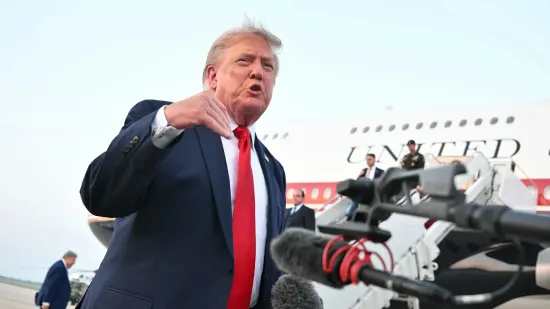
Upon his return to Joint Base Andrews following the FIFA World Cup final, US President Donald Trump stated that the strikes were in response to the deaths of American servicemen.
“We deeply regret these deaths. But these great patriots were fighting to prevent Iran from acquiring nuclear weapons. Iran has suffered very serious losses. It has almost completely lost its military capabilities,” said Trump.
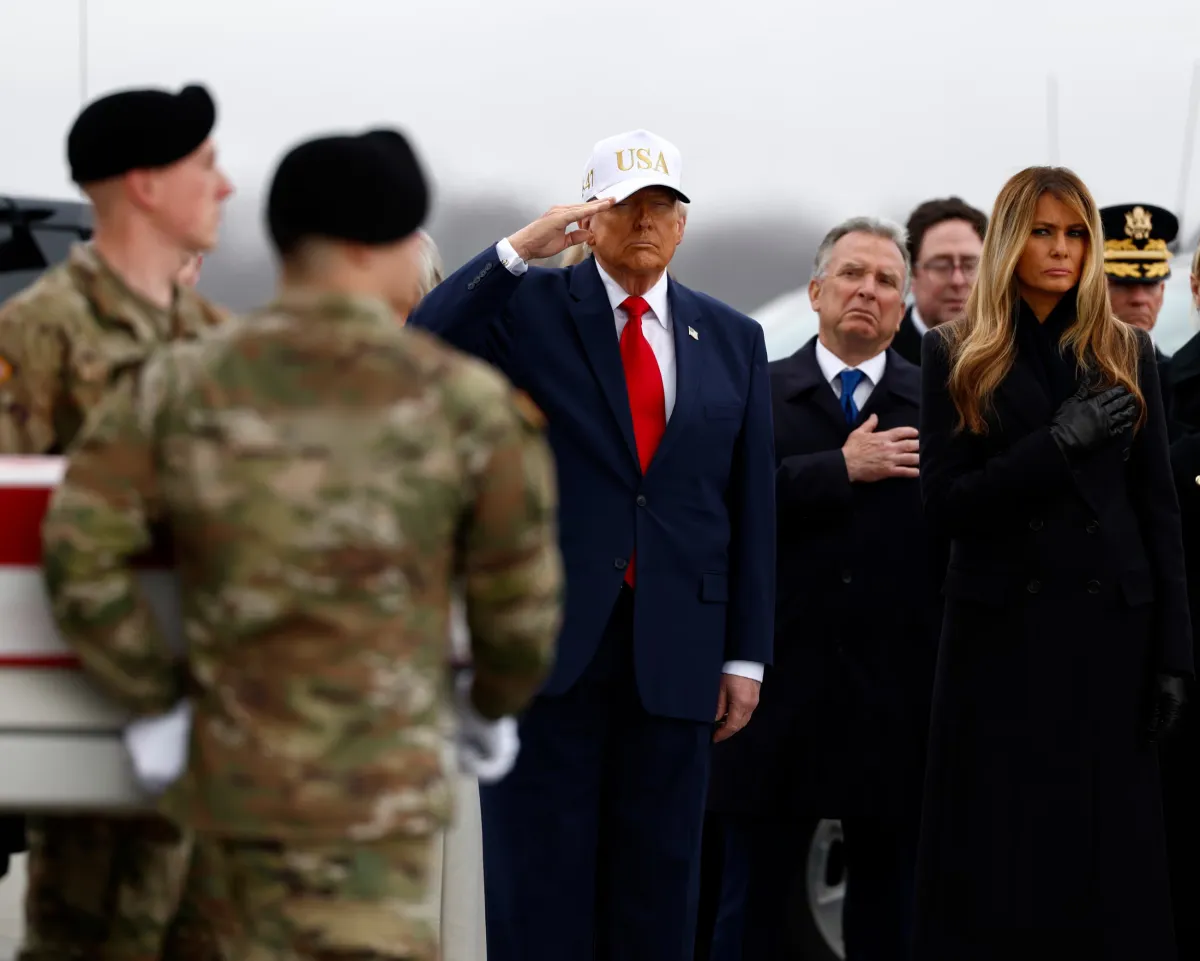
On Monday, the Pentagon released the names of two service personnel who were killed as a result of the Iranian strike on a US base in Jordan. They were 25-year-old First Lieutenant Tyler James Feehan from Ewa Beach, Hawaii, and 19-year-old Private Isabella Gonzales from Carrollton, Texas. The circumstances of the incident are under investigation.
US Central Command also reported that the unidentified remains of one further person had been found at the site of the strike in Jordan. Separately, it has been reported that a US serviceman was killed in northern Iraq during a controlled detonation of unexploded ordnance following the destruction of an Iranian drone.
According to The Washington Post, hostilities have now been ongoing for the ninth day following the breakdown of the ceasefire. The new round of conflict was triggered by Iran’s attacks on commercial vessels in the Strait of Hormuz, which Tehran described as a breach of the memorandum of understanding signed a month ago.
Iran also claimed that US forces had struck a nuclear power station under construction in the south-west of the country.
US Energy Minister Chris Wright said on ABC television that the operation to reduce Iran’s ability to ‘terrorise the world’ would continue until the mission was accomplished.
According to another US official, Iran viewed last week’s US strikes on bridges and railway infrastructure near Bandar Abbas as a further escalation of the conflict.
“They were far less concerned with inflicting massive casualties on the United States,” he said.
On Sunday, Kuwait reported a second consecutive strike on energy and water infrastructure facilities. At the same time, Iran claimed to have carried out drone attacks on US military positions in Kuwait.
Jordan reported that it had intercepted three Iranian missiles amid reports of an attack on the port and airport of Aqaba, near Eilat in Israel. However, the country’s government has denied reports of an evacuation of the airport, which had previously been cited by the US embassy.
Iran also stated that two unidentified vessels had been involved in an accident whilst travelling along a ‘dangerous’ route through the Strait of Hormuz. This is likely to refer to the southern corridor along the coast of Oman, which is under US protection.
The blockade of Iranian ports and fuel prices in the US
US Energy Secretary Chris Wright has stated that the American operation to reduce Iran’s military capabilities will continue until the objective has been achieved. He also backed Donald Trump’s earlier statement that the war, which began following the US and Israeli strikes on 28 February, could last between four and six weeks before Iran surrenders.
According to Wright, hostilities were temporarily suspended under a memorandum of understanding in an attempt to reach an agreement that would ensure the safe transport of oil without attacks from Iran.
He also dismissed as inaccurate reports of an almost complete halt to shipping through the Strait of Hormuz.
The minister stated that the US had re-imposed a naval blockade on vessels entering or leaving Iranian ports, and was also providing protection for other vessels passing through the southern corridor along the coast of Oman.
According to Wright, over the past week an average of around 7 million barrels of oil have passed through this route each day.
Comparing the current situation in the fuel market with the period of the COVID-19 pandemic, he stated that petrol in the US today costs approximately one dollar per gallon less than it did under Joe Biden’s administration.
At the same time, after a brief dip during negotiations on the memorandum of understanding, fuel prices have once again begun to rise rapidly. The average price of petrol currently stands at around $4 per gallon.
Democratic Senator Mark Warner questioned the minister’s assessment.
‘I don’t know which petrol station the minister visits, but before the war, the average price of petrol in Virginia was $2.81. I do not see any possibility of resolving the situation in the Strait of Hormuz in the near future. This war has been a disaster. It has been a military disaster and a disaster in terms of how we are perceived around the world,” said Warner.
The security situation for US troops at bases in the Middle East
Following the deaths of American servicemen, the issue of the security of US military bases in the Middle East has once again come under the spotlight.
One of the servicemen, who had previously served at the Muwaffaq Salti airbase in Jordan, where two American soldiers were killed, speaking on condition of anonymity, said that a significant proportion of the structures at the base consist of prefabricated or metal structures and tents, which are unable to withstand missile, mortar or drone strikes.
According to him, even more modern fortified structures, protected by several layers of thick walls, do not guarantee protection against a direct hit from a ballistic missile.
He also reported that in early March, during an intense exchange of missile strikes between the US and Iran, a direct hit on the fortified barracks at the US base Camp Arifjan in Kuwait pierced the protective structures and destroyed approximately half of the building.
According to the military official, other US military facilities in the region have also suffered similar damage.
“We are being hit from all directions,” he said.
According to US officials, Friday’s strike on the base in Jordan was at least the second successful attack by Iran on this facility within a week. About a day earlier, another attack had wounded around 20 US service personnel, some of whom suffered shrapnel wounds.
In total, according to The Washington Post, 17, and possibly 18, US service personnel have been killed as a result of military operations against Iran, with over 430 more wounded.
Over the past week, Jordan has been the target of repeated attacks. Other strikes included attacks on King Faisal Air Base and Prince Hassan Air Base. In the first instance, American service personnel were wounded; in the second, Black Hawk helicopters were damaged.
Representatives of the Pentagon and US Central Command declined to comment on the previous attacks. Meanwhile, the Pentagon has not held any press briefings regarding the operation against Iran since 5 May.