Getmantsev: Sushi chains in Ukraine are making widespread use of sole trader schemes

Katerina Melnychenko
Katerina Melnychenko Deputy Editor-in-Chief
Getmantsev: Sushi chains in Ukraine are making widespread use of sole trader schemes

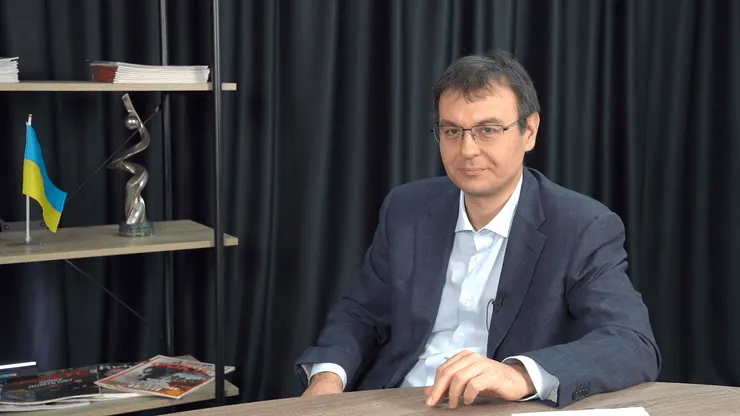
Danylo Getmantsev, Chair of the Verkhovna Rada Committee on Finance, Tax and Customs Policy
In Ukraine, a significant proportion of sushi chains operate because the business has been fragmented into a large number of sole traders.

This was stated by Danylo Getmantsev, Chair of the Verkhovna Rada Committee on Finance, Tax and Customs Policy.

According to him, the sushi market in Ukraine largely operates not as traditional legal entities, but as networks structured through sole traders.

He noted that despite generating billions in turnover, such businesses are formally divided into individual sole traders, which allows them to reduce their tax burden, particularly with regard to value-added tax.

Getmantsev emphasised that, at the same time, these networks actively use modern sales tools — online orders, websites and large-scale advertising.

The essence of the scheme

According to the committee chair’s description, the model involves a single de facto network operating as a collection of individual sole traders.

This, he said, allows tax liabilities to be minimised and full VAT payments to be avoided, even with significant turnover.

He added that there are already examples on the market of companies that operate entirely through a single legal entity and pay their taxes in full.

Reaction from the authorities

Getmantsev reported that he had forwarded the collected evidence, receipts and photographic evidence to the Economic Security Bureau and the State Tax Service, requesting that the relevant chains be investigated.

He also called on restaurant owners to abandon the practice of splitting their businesses and to switch to a fully legal business model.

The tax authorities have previously stated that splitting businesses via sole traders is one of the most common tax evasion schemes. The state is stepping up its monitoring of such practices.

Follow us on Telegram

Share tittle
Economy
‘The country could run out of bread.’ The Russian State Duma has alleged that the scale of the fuel crisis is being concealed
Economy

‘The country could run out of bread.’ The Russian State Duma has alleged that the scale of the fuel crisis is being concealed

In Russia, it has been claimed that the authorities are concealing the true scale of the fuel crisis, which has worsened following the strikes on oil refineries. The State Duma has warned of the risks to the agricultural sector and the supply of goods.

02.07.2026
The government’s debt under the ‘5-7-9 per cent’ scheme could rise to 10 billion hryvnia
Economy

The government’s debt under the ‘5-7-9 per cent’ scheme could rise to 10 billion hryvnia

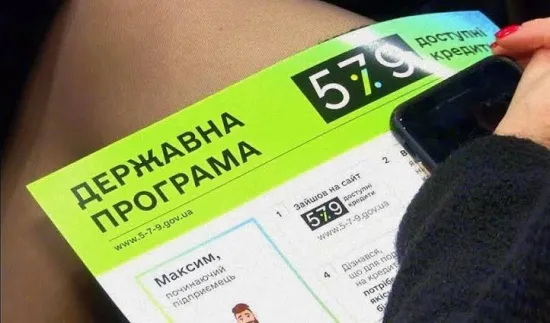
The government’s debt to banks under the ‘Affordable Loans 5-7-9%’ programme could reach around 10 billion hryvnias by the end of 2026. The National Bank believes that the preferential lending programme needs to be made more targeted, as some businesses are already able to secure loans without state subsidies.

02.07.2026
Sobolev presented new booking rules to Parliament: what will change for businesses
Economy
  • Important

Sobolev presented new booking rules to Parliament: what will change for businesses

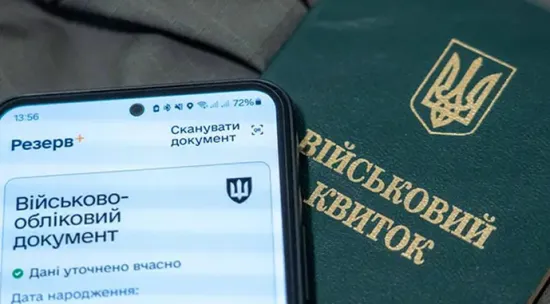
The Cabinet of Ministers has updated its approach to the exemption of conscripts from military service by revising the criteria for identifying critical enterprises and the procedure for confirming their status.

02.07.2026
Italy is to allocate a further €1 million to Ukraine for cyber defence
Economy

Italy is to allocate a further €1 million to Ukraine for cyber defence

Over the next six months, Italy will provide Ukraine with a further €1 million to implement cybersecurity projects. This will bring the country’s total contribution under the Tallinn Mechanism to €2 million.

02.07.2026
Billions without any real competition: what the public procurement audit revealed
Economy

Billions without any real competition: what the public procurement audit revealed

In 2025, the majority of public procurement contracts were, in effect, awarded without any real competition. According to the findings of the Audit Office, the Ministry of Economy’s annual report did not provide a complete picture of public procurement.

01.07.2026