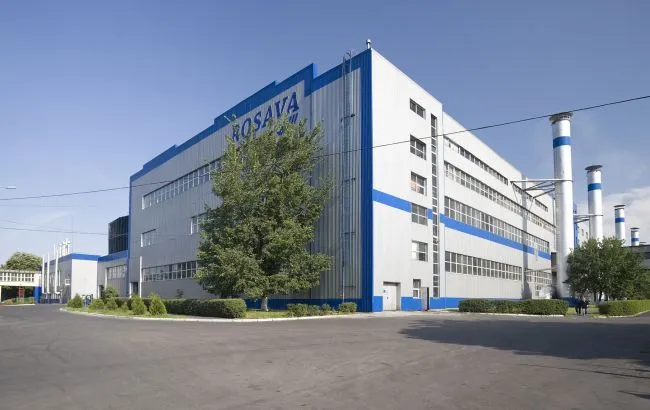
Ukraine’s only major tyre manufacturer has halted production – what has happened to the Rosava plant?

This is reported by AutiChronicleHub.
As the publication notes, this is a major loss for Ukrainian industry, as Rosava was not only a well-known brand but also a key manufacturer of tyres for passenger cars, lorries, agricultural machinery and specialised vehicles.
The Bila Tserkva tyre factory was established back in 1972. It later became known under the Rosava brand, and its products were sold both in Ukraine and abroad.
The company produced tyres under the ROSAVA, PREMIORRI and ROSAVA-AgroS brands. In some years, the factory was capable of producing up to 6 million tyres annually.
However, the company’s problems began long before the full-scale war. As early as 2018, the Commercial Court of Kyiv Region declared Rosava bankrupt. Following this, the company changed its management structure several times and underwent attempts at restructuring and asset sales.
The main problem for Rosava was competition from cheap imported tyres – primarily from China and Turkey. The Ukrainian manufacturer operated in the budget segment, where buyers are most often price-sensitive.
The publication emphasises that tyre manufacturing is an extremely energy-intensive and costly business, as it requires expensive raw materials, high electricity costs, complex logistics and constant equipment modernisation.
After the outbreak of full-scale war, the situation only worsened. Ukrainian industry faced a fall in domestic demand, rising energy costs, expensive loans and export problems.
Against this backdrop, imported tyres often proved cheaper than Ukrainian ones.
Following Rosava’s closure, the Ukrainian tyre market will be almost entirely dependent on imports. This is likely to have the greatest impact on the budget segment of car tyres, agricultural machinery, freight transport and specialised industrial tyres. For consumers, this means greater dependence on exchange rates and international logistics.
For Bila Tserkva, Rosava was one of the largest employers and a key part of the city’s economy for decades, as contractors, logistics firms and service providers operated around the plant.
Experts note that the plant’s closure is yet another sign of the crisis facing Ukraine’s old industrial model, which cannot withstand competition in the global market without large-scale investment and modernisation.
Follow us on Telegram