The High Anti-Corruption Court has upheld the charges against Yulia Tymoshenko in the NABU and SAPO case

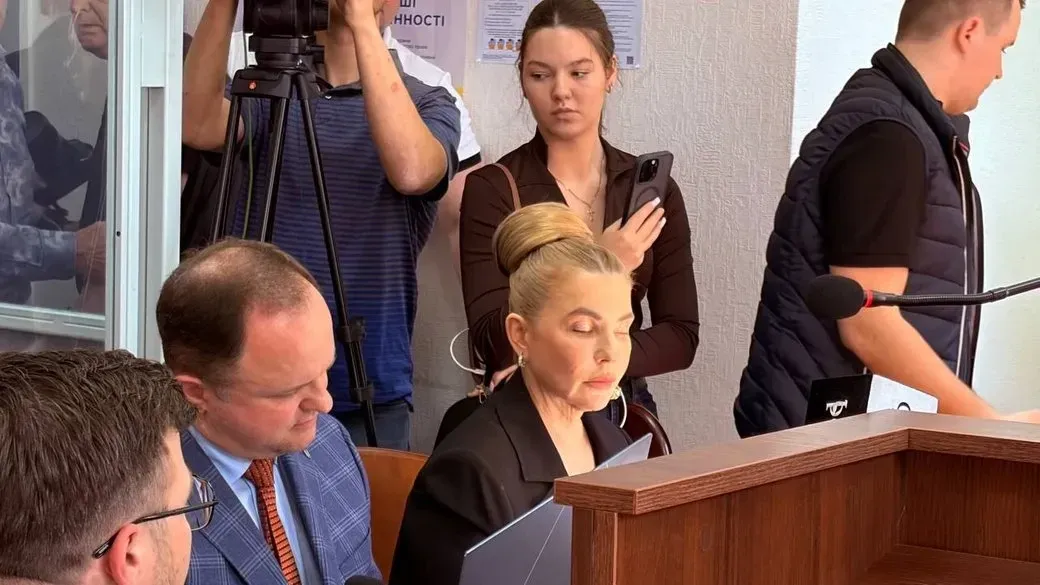
This is stated in the court proceedings before the Appeals Chamber of the High Anti-Corruption Court in the case concerning the allegations against Yulia Tymoshenko.
On 12 May, the Appeals Chamber of the High Anti-Corruption Court considered the appeals lodged by Yulia Tymoshenko’s defence team against the ruling of the investigating judge of the High Anti-Corruption Court, which refused to quash the notice of suspicion.
Following the hearing, the court dismissed the defence’s appeals.
The panel of judges concluded that the witness statements, taken together with other evidence, are sufficient to justify the charges. This relates, in particular, to funds seized during a search, the amounts of which match those mentioned by the witnesses, as well as correspondence.
The NABU and the SAPO suspect Yulia Tymoshenko of attempting to bribe other MPs. According to the investigation, this involves offering bribes to influence the results of votes in parliament.
What the defence claimed
The defence claimed that the MP had allegedly been charged with gross violations of criminal procedural law.
One of the key arguments concerned the procedure for registering criminal proceedings. The lawyers insisted that a pre-trial investigation could only be conducted within the scope of those offences for which information had been entered into the Unified Register of Pre-trial Investigations (URPI).
In the defence’s view, if during the investigation the authorities uncover another offence, conducting investigative actions without entering new data into the Unified Register of Pre-trial Investigations is unlawful. In this case, the lawyers argued, the charges were brought in relation to an offence that had not been properly registered.
The defence also pointed to a chronological error in the charge.
According to the investigation, the impetus for the alleged actions was the exposure by law enforcement of bribery of MPs in December 2025, which led to a tense situation in parliament.
At the same time, as the defence pointed out, the charge itself refers to a crime allegedly committed in January 2026, whereas the proceedings were opened much earlier. For this reason, the lawyers believe that the charge was effectively served in relation to ‘unopened’ proceedings.
Separately, the defence referred to the practice of the Supreme Court. According to the lawyers, every act within the activities of an organised criminal group must be registered and classified separately. In the defence’s view, NABU detectives failed to comply with this requirement.
What Tymoshenko said in court
In her statement, Yulia Tymoshenko claimed that the evidence was, in her view, weak and that the sequence of actions taken by law enforcement was unclear.
She claimed that the case against her rests on the testimony of witness Kopytin and his assistant, a single audio recording, three expert reports and messenger chat logs, which, she said, make no mention of money.
Tymoshenko drew the court’s attention to several dates.
On 27 November 2025, criminal proceedings were initiated on the basis of notes from the head of the SAP.
On 7 January 2026, the investigating judge of the High Anti-Corruption Court granted permission to conduct a pre-trial investigation, although, according to Tymoshenko, at that time there was no criminal complaint, interrogation report or other substantial evidence.
On 9 January 2026, the witness Kopytin officially filed a report of a crime with the NABU.
Tymoshenko and her defence team believe that permission for the search and seizure was allegedly obtained without legal grounds and, in fact, for the purpose of “finding grounds for suspicion”.
She also claimed that the search of the Batkivshchyna party office on 13–14 January was allegedly unlawful. According to her, the search was carried out without a relevant court order. Furthermore, Tymoshenko asserted that during the search, other MPs were allegedly searched, but this was not recorded in the report.
The defence also noted that it had not yet familiarised itself with all the investigation materials.
On 28 April, the High Anti-Corruption Court limited the time allowed for Tymoshenko and her defence team to review the pre-trial investigation materials to 24 May 2026.
The prosecution’s position
The prosecutor from the Specialised Anti-Corruption Prosecutor’s Office (SAPO) opposed the defence’s appeal.
He described the defence’s demands as unfounded and stated that the lawyers’ position amounted to “formal assessments and subjective opinions” which did not refute the substance of the allegations.
The prosecutor also noted that the defence had in fact continued to gather evidence to substantiate its position even after lodging the appeal with the court.
The prosecution refuted the claim that the evidence was insufficient.
Among the materials on which the suspicion is based, the prosecutor cited the interrogation reports dated 5, 9 and 12 January 2026, the report on the examination of information regarding the vote that was the subject of discussion at the National Security and Defence Council, the report on the examination of the mobile phone of a person cooperating with the investigation, and the report on the search conducted as part of the investigation.
The prosecutor emphasised that the court had found all this evidence to be sufficient, taken together, to confirm the validity of the suspicion at this stage of the proceedings.
What the court decided
The Appeals Chamber of the High Anti-Corruption Court (HACC) dismissed the defence’s appeals.
Consequently, the ruling by the HACC investigating judge refusing to overturn the notice of suspicion against Yulia Tymoshenko remains in force.
As reported by ThePublic, the HACC returned Tymoshenko’s foreign passports in the NABU case.
Follow us on Telegram