The UK refuses to send warships to the Strait of Hormuz

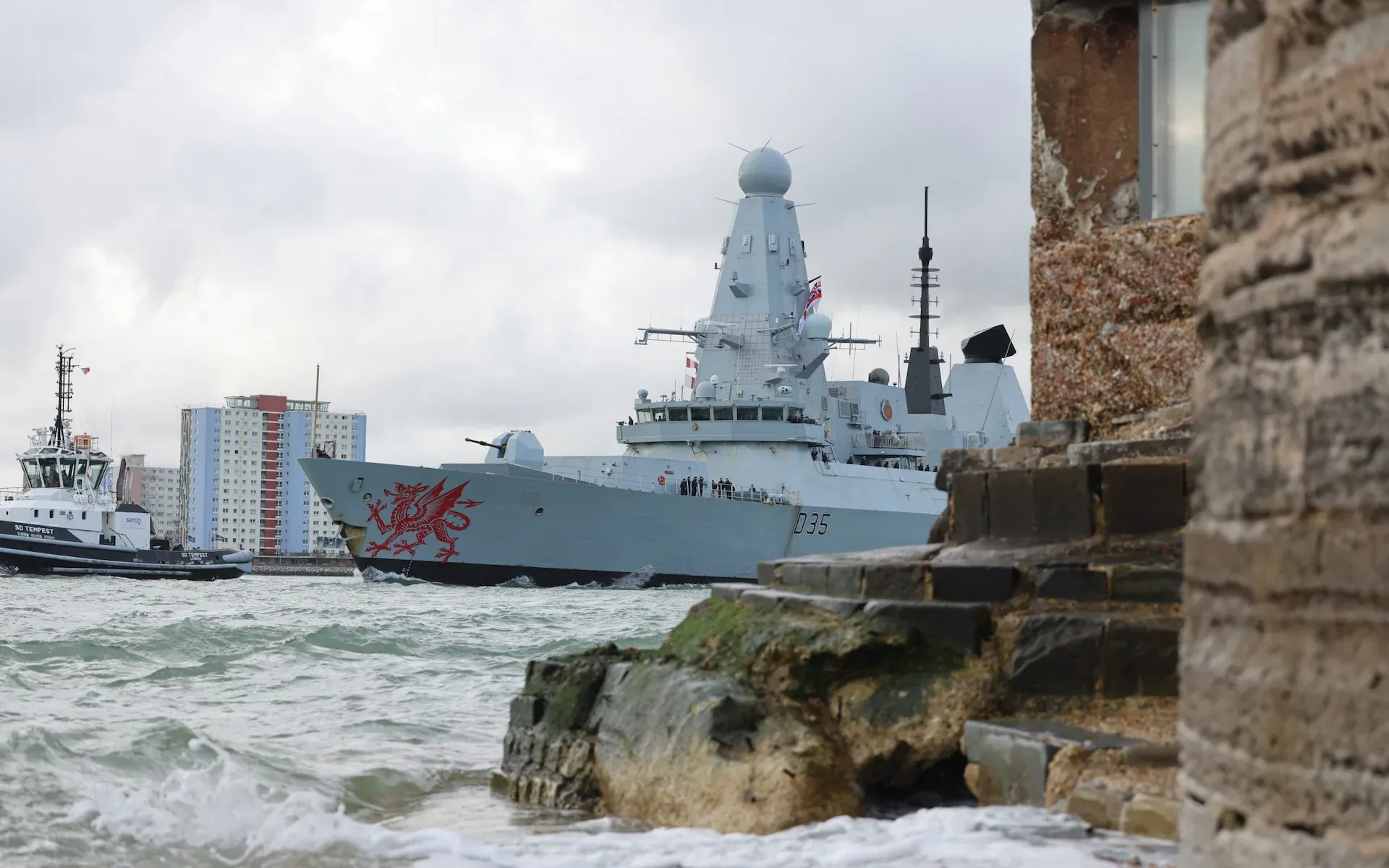
British Prime Minister Keir Starmer has refused to send warships to help reopen the Strait of Hormuz following a call by US President Donald Trump to strengthen the international presence in the region, reports The Telegraph.
Britain and other allies have not yet supported Trump’s request for joint action. Against this backdrop, financial markets are bracing for possible further turmoil.
UK Energy Secretary Ed Miliband stated that the government is “intensively considering” options that could help reopen the strait, but has not made any firm commitments.
According to government officials, the possibility of using drones to search for sea mines is being considered. At the same time, the authorities are not currently prepared to send military ships to clear this vital oil supply route of mines. One British ship is already at sea.
Iran has previously warned that any country joining an operation in the strait against it would be regarded as a party to the war.
France, Germany and South Korea are showing similar caution, having also signalled their reluctance to comply with the US president’s demand to send ships.
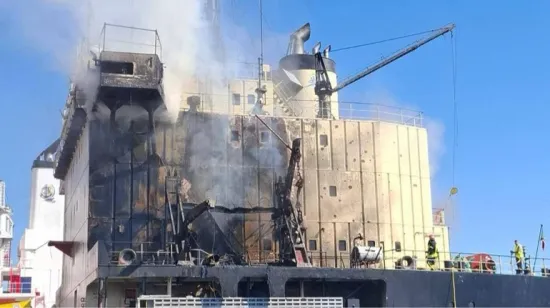
Last week, Iranian missiles struck a Thai-flagged cargo ship in the Strait of Hormuz.
Against the backdrop of US strikes on key targets in Iran’s oil infrastructure, oil prices rose to $106 per barrel from $103 on Friday.
Iran’s blockade of oil shipments through the strait has caused energy prices to rise. On Monday, Keir Starmer addressed the nation and announced £50 million in emergency aid for the hardest-hit households.
Speaking from Downing Street, the Prime Minister said: “It is moments like these that show what a government is made of.”
He added: “My response is clear. Whatever challenges lie ahead, this government will always stand by working people. It is my first instinct, my first priority – to help you cope with the cost of living during this crisis.”
The support is expected to reach around one million households that use heating oil, mainly in rural areas of Northern Ireland.
US Energy Minister Chris Wright warned that there are no guarantees that oil prices will fall in the coming weeks.
During a telephone conversation between Keir Starmer and Donald Trump, the two discussed the importance of keeping the Strait of Hormuz open. However, the UK’s refusal to send warships could deepen the rift between Starmer and Trump. The US President had previously stated that the British Prime Minister was “no Churchill” after he refused to support the initial American strikes.
According to US officials, Donald Trump plans to announce this week the formation of a coalition of states willing to escort ships through the Strait of Hormuz. However, several countries are unwilling to send their ships whilst the war is ongoing, which is increasing pressure on the US president to end hostilities.
Iran’s Deputy Foreign Minister warned the UK not to join the operation.
“We are not at war with the UK, but any participation in this war will be regarded as participation in the war of aggression by the US and Israel against Iran,” he said.
In an interview, Donald Trump stated that he was not prepared to negotiate a ceasefire with Iran.
“Iran wants to make a deal, but I don’t want to do that because the terms aren’t good enough yet,” he said.
Iran, for its part, stated that it had not requested a ceasefire and saw no grounds for negotiations with the US.
The US president called on China, France, Japan, South Korea and the UK to send warships to the Persian Gulf. France also rejected this request on Sunday. The French Minister of the Armed Forces stated that the country’s position would remain “defensive and protective” and that Paris had no intention of becoming involved in the war being waged by the US and Israel.
South Korea has said it is closely monitoring the situation and consulting with its allies.
Germany has also expressed doubts about the idea of extending the European Union’s Aspides naval mission to the Strait of Hormuz. German Foreign Minister Johann Waduful stated that the mission, established to protect merchant ships in the Red Sea, “is not effective”. He told German broadcaster ARD that he was sceptical that extending it to the Strait of Hormuz would provide greater security.
There have also been reports that the Iranian authorities are considering allowing vessels linked to China to pass through the strait to mitigate the economic consequences for their strategic partner. It is reported that some vessels have begun altering their transponder signals to appear as if they are linked to China.
In response to the crisis, Donald Trump has deployed a US Marine Corps unit from the Far East to the Persian Gulf.
The UK is considering various options for contributing to the security of shipping. These include the use of unmanned aerial vehicles to search for sea mines. So far, London has deployed only one ship, HMS Dragon, which will be stationed in the eastern Mediterranean to bolster air defences around Cyprus. These unmanned systems are capable of operating much faster than traditional minesweepers and were developed as part of a joint project between the UK and France. They were due to enter service earlier this year, but their deployment may be accelerated due to the crisis. The UK is also considering the possibility of deploying frigates and submarines. One of the submarines has left port in Australia and is heading for the Indian Ocean.
Ed Miliband stressed that keeping the Strait of Hormuz open is “very important”. “There are various ways in which we could help, including the use of drones to search for mines,” he said.
India has stated that the most effective way to restore shipping is through direct negotiations with Iran.
Meanwhile, Donald Trump also claimed that Iran’s new Supreme Leader, Mojtaba Khamenei, may be dead. A Kuwaiti newspaper reported, citing a source within the Iranian leadership, that Khamenei had been taken to Russia for an operation.
The Israeli military stated that there remain “thousands” of potential targets for strikes in Iran. A military spokesperson said that Israeli forces are planning at least another three weeks of strikes and have additional plans for the following three weeks. At the same time, the Israeli government and military denied reports of a shortage of interceptor missiles.
UN peacekeepers reported that they came under fire in southern Lebanon, likely from armed non-state groups. Israel stated that it has no plans for direct talks with Lebanon regarding an end to the war with the Hezbollah group.