Dubai International Airport could lose more than $1 billion every day

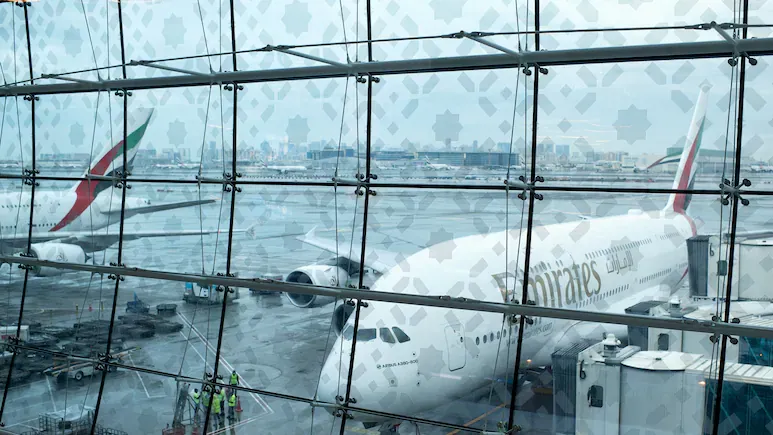
Dubai is facing the consequences of the effective closure of airports after Iranian missiles flew through key air corridors. Dubai International Airport (DXB) and Al Maktoum International Airport have suspended operations, and airlines have cancelled or rerouted hundreds of flights through one of the world's busiest air hubs. This was reported by The Public with reference to NDTV.
In 2023, DXB served 87 million passengers. In the first quarter of 2025, the figure was 23.4 million, which corresponds to approximately 260 to 270 thousand travellers per day. On 3 January 2026, the airport recorded a record 324 thousand passengers in one day. With the cessation of this flow, revenues from airport fees, duty-free trade and concessions are declining.
The key operator is Emirates airline. In the first half of the 2025-2026 financial year, the airline reported revenues of 65.6 billion dirhams, equivalent to approximately 360 to 370 million dirhams or 98 to 100 million dollars per day across its global network. Even if some passengers are rebooked, the complete shutdown of the base hub affects a significant portion of daily turnover. The consequences are also being felt by flydubai and more than 100 foreign carriers that use Dubai as a transit hub between continents.
Dubai officials have previously stated that an unplanned closure of DXB could cost around $1 million for every minute of downtime, taking into account the knock-on effects for airlines, cargo transport, tourism and local businesses. As a benchmark, this means that a 24-hour shutdown could result in losses and delays in economic activity amounting to hundreds of millions or even more than $1 billion.
Industry estimates indicate that large hubs typically receive between $40 and $70 per passenger in air navigation charges and terminal fees. Based on normal daily traffic at DXB, this means a loss of between $10 million and $18 million in airport revenue for a single day without traffic. Taking into account Emirates' approximately $100 million in daily revenue, as well as revenue from hotels, shopping centres and restaurants associated with transit passengers, the impact on the aviation sector is measured in hundreds of millions of dollars.
Dubai International Airport is the world's busiest airport in terms of international passenger traffic, serving nearly 100 million people a year. It connects more than 260 cities in over 100 countries and is the base hub for Emirates and flydubai. The airport plays a key role in transport between India and Europe, India and the US, and between Asia and Africa. It is also an important cargo and logistics hub.
According to a study commissioned by Emirates, in 2023 the aviation sector contributed 137 billion dirhams, or about 37 billion dollars, equivalent to 27 per cent of Dubai's GDP, and supported about 630,000 jobs. When tourist spending is taken into account, the figure rises to approximately 180 billion dirhams and nearly one in three jobs. Retail and wholesale trade, which are largely linked to tourist flows, account for another quarter of GDP.
In 2025, Dubai's real estate market recorded sales of around 680 billion dirhams, which is approximately 1.8 to 1.9 billion dirhams per day. The Jebel Ali Free Zone and port handled a record $190 billion in trade in 2024, exceeding $500 million in goods per day. These figures are not direct losses from the current shutdown, but they demonstrate the scale of economic activity that depends on the city's continuous operation as a global hub.
Financial markets have already reacted. Dubai's main stock index fell by about 1 to 2 per cent in the days of greatest tension after the strikes, resulting in a loss of about $4 to $5 billion in market value amid revised earnings forecasts for airlines, developers and banks.