How is the new building market in the suburbs of Kyiv doing

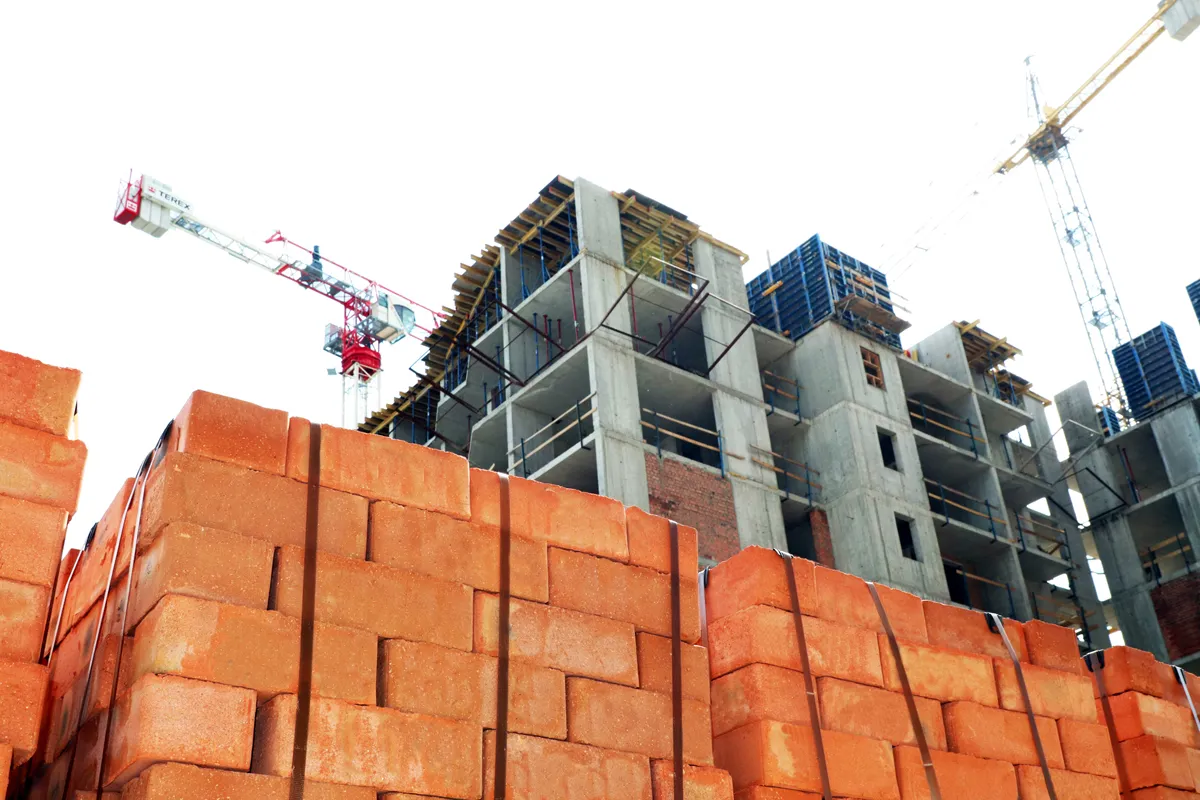
Economic Truth analyzed the housing market near the capital.
The reasons for high demand are temporary and unstable, supply is decreasing and not being replenished, and developers themselves are barely balancing "debit with credit," the publication writes.
Hostilities in spring 2022 near Irpen, Bucha, and Brovary did not lead to a catastrophic outflow of funds from apartment buyers, says Volodymyr Danylchenko, CEO of M4U – developer of the analytical service P/ARC.
"Kyiv is the capital, the economic and business center. Investments from frontline zones are actively flowing here. The Kyiv region is considered a good option for preserving funds, especially those received from payments to military personnel and families of fallen heroes. Clients from Sumy, Kharkiv, Zaporizhzhia, and Donetsk regions are frequent visitors to the sales offices of residential complexes," says Danylchenko.
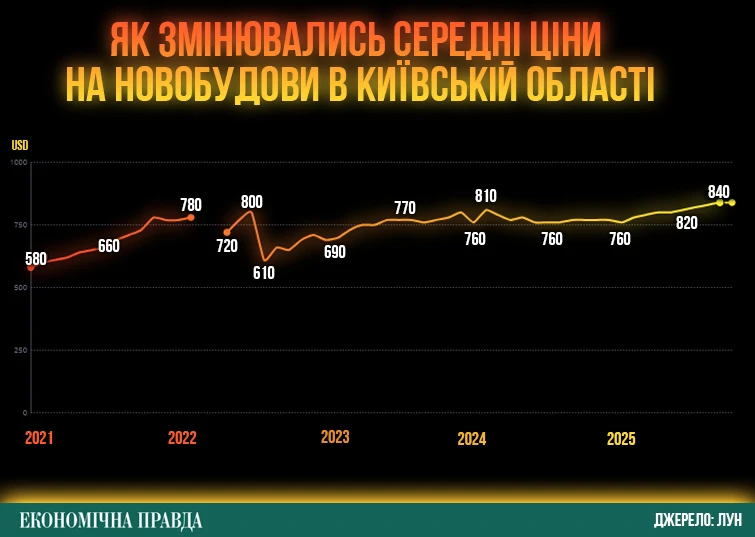
The company LUN states that the price is a motivating factor for buying housing in the suburbs. In Kyiv, the average price per square meter is $1,320, in the suburbs – $800-900. The secondary real estate market is more popular than the primary, according to OLX Real Estate. In August, demand on the secondary market was 23% higher than new buildings, and supply was 22% higher (for one- to three-room apartments in general).
"According to our survey and comments from developers, Ukrainians prefer ready-made housing and are not willing to risk or wait for a building to be constructed, so the percentage of investments in the foundation is very low," OLX Real Estate reported.
In the first eight months of 2025, the average selling price of apartments from developers in the suburbs of the capital was 35,600 UAH per sq. m., compared to 34,000 UAH in the same period of 2024, according to data from the P/ARC analytical service. An increase of 5% – significantly lower than the inflation rate, especially for building materials.
LUN reports similar figures: the average price per square meter in new buildings in Kyiv region increased from 32,000 UAH in September 2024 to 34,700 UAH in September 2025.
The cost of housing in the suburbs surprises Kyiv developers. "I don't understand how developers in Kyiv region reach a cost of $700 per square meter. Such a figure can only be achieved through savings on construction quality and minimizing tax burdens," says Serhii Pylypenko, CEO of the industrial-construction group "Kovalska."
An owner of another building materials manufacturing company told EP anonymously about a new phenomenon in the market that is "rapidly gaining momentum." Some developers from Irpen have started offering barter proposals: providing building materials in exchange for future square meters. "This smells like some kind of pyramid scheme," says the interlocutor.
The number of residential complexes near Kyiv remains stable, according to LUN. In 2024, developers sold apartments in 159 complexes within 20 km of the capital, now – in 158.
OLX records an increase in the number of listings for the sale of new one-room apartments in Irpen (+23%), Boryspil (+54%), Bucha (+18%), Brovary (+42%) and a decrease in offers in Sofiivska Borshchahivka (-29%), Vyshneve (-28%) and Hatyne (-57%).
The first eight months of 2025 set a record since the start of the large war for the pace of apartment sales in new buildings in Kyiv region, according to P/ARC data. "During this time, according to our calculations, about 6,700 apartments were sold in the primary market of the region for about 13 billion hryvnias, compared to just under 5,000 apartments for 9 billion hryvnias in the same period of 2024. Overall, the growth in quantity was 33%, in value – 45%," says Danylchenko.
Housing seekers focus on ready and nearly ready housing, says LUN.
More than 10% of all transactions in Kyiv region are on "e-Home," notes Danylchenko. The figure could be higher, but according to P/ARC, only 43 out of over 200 accredited objects in the region are actively selling.
Choosing a house outside the city is not only about dreams of nature and fresh air but also about practicality and daily comfort. To ensure your decision does not turn into disappointment, it is worth evaluating several key criteria.
1. Logistics and transportation
Before making a decision, definitely test the route both ways during rush hour. Imagine whether you are ready to spend this time daily commuting to work and back. The distance on the map and actual travel time due to traffic jams can differ significantly.
2. Infrastructure
Make a list of essential objects for yourself. What are you used to in the city? Daily needs: supermarket, pharmacy, kindergarten, school, doctor/clinic, cafe, park, sports ground or gym.
3. Building quality and communications
This is the foundation of your future comfort. Energy efficiency: pay attention to the materials used to build the house. For example, popular panoramic windows look impressive, but in our climate, they can lead to significant heat loss and, as a result, high heating bills. Assess the quality of access roads, check what brand of elevators and entrance doors are installed. This indicates the developer's attitude towards quality.
Engineering networks - this is a critically important aspect, especially for new buildings on the outskirts. Be sure to find out where the house's sewerage is connected. The best and most reliable option is a centralized system. If a local treatment plant (septic) is used for the entire building, learn about its capabilities, maintenance regularity, and guarantees from the developer. Poor operation can cause serious problems.
4. Security
Availability of round-the-clock security on the territory and video surveillance systems – this is not a trifle but a serious bonus that ensures peace of mind for you and your family.
Carefully weigh all the "pros" and "cons." The ideal option is a combination of good ecology, developed infrastructure, quality construction, and reliable communications.