Weight loss injections can cost around $3 per month.

Boris Bodnar
Boris Bodnar Journalist
Weight loss injections can cost around $3 per month.

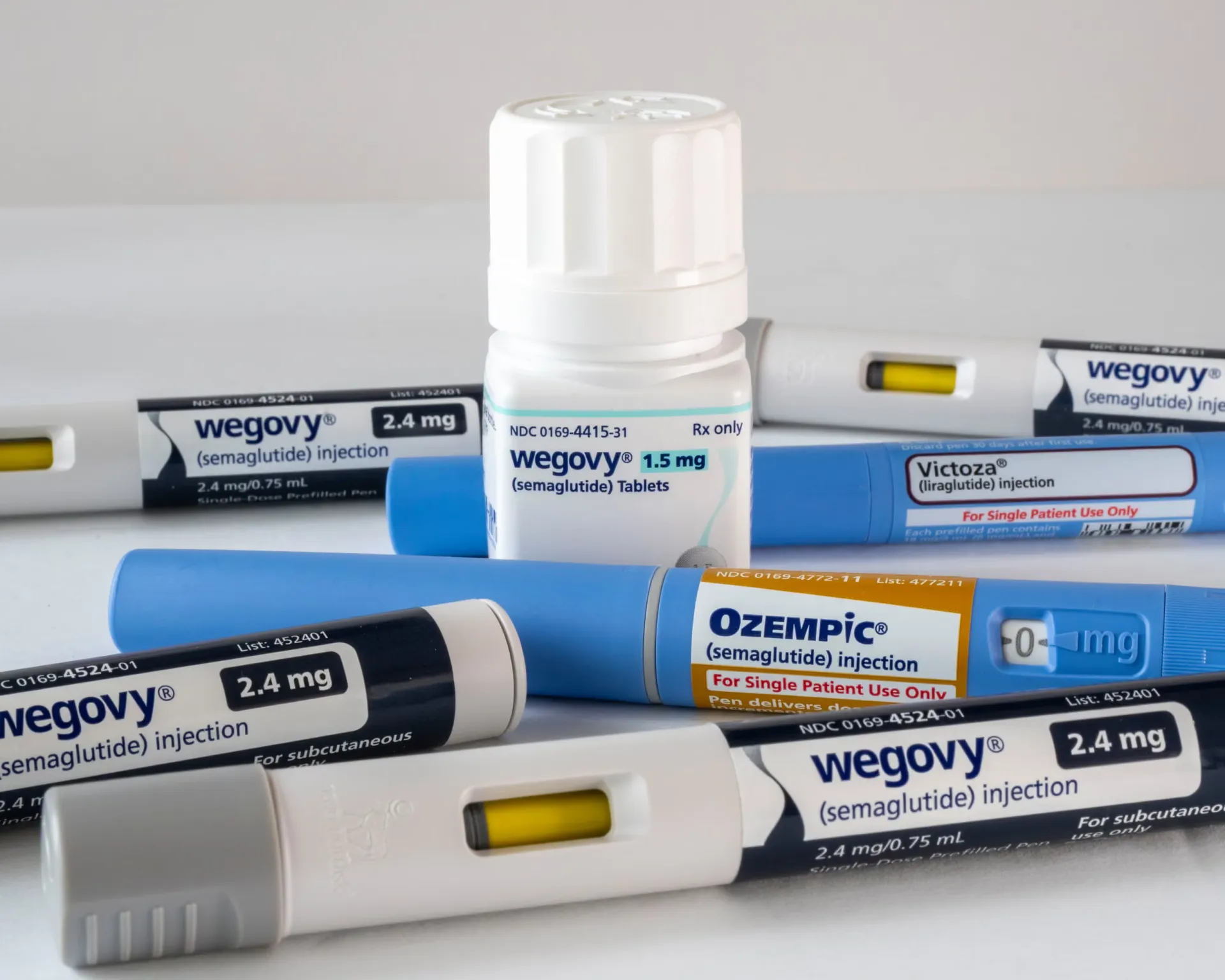
The WHO designated semaglutide – sold to treat obesity under the Wegovy brand name and diabetes under the brand name Ozempic. Photo Gettyimage
New analysis has shown that semaglutide, the active ingredient in Wegovy and Ozempic, can be produced much more cheaply. Researchers estimate that the injectable form of the drug could cost around $3 per month.

Semaglutide-based weight loss drugs, such as Wegovy, could cost around $3 per month if mass-produced. This conclusion comes from a new analysis that looks at the potential affordability of treatment for millions of people in lower-income countries after patent protection expires.

More than a billion people worldwide are obese. The disease is growing rapidly in lower-income countries due to changing eating habits and less active lifestyles.

In September last year, the World Health Organisation added semaglutide to its list of essential medicines. The drug is used to treat obesity under the brand name Wegovy and to treat diabetes under the brand name Ozempic.

At the same time, representatives of the global health system noted that the high cost limits access to this treatment.

A new study, published in preprint format, shows that the injectable form of semaglutide can be mass-produced for about $3 per month.

Newer forms of the drug in tablet form could cost around $16 per month, according to researchers' estimates.

One of the study's authors, Dr Andrew Hill from the University of Liverpool's School of Pharmacology, said: "These low prices open the door to global
access to essential medicines."

The researchers also found that the main patents for semaglutide expire this year in ten countries. These include Brazil, China, India, South Africa, Turkey, Mexico and Canada. The patents in these countries are expected to expire on 21 March, which could pave the way for generic drugs to appear.

The researchers also identified 150 other countries where patents for this drug have not been registered. These include most African countries. These 160 countries are home to approximately 69 per cent of people with type 2 diabetes and 84 per cent of people with obesity.

Another author of the study, Professor François Venter of the University of the Witwatersrand in Johannesburg, noted:

"Medicines for HIV, tuberculosis, malaria and hepatitis are available in low- and middle-income countries at prices close to cost, saving millions of lives while allowing generic manufacturers to make enough profit to ensure a stable supply. We can repeat this medical success story for semaglutide."

At the same time, the researchers emphasised that cheaper medicines will not eliminate the structural causes of obesity. Among these, they cited food insecurity, poverty, urbanisation and the commercial food environment. In their view, coordinated policy decisions and procurement planning are necessary to reap the benefits of such drugs.

Dr Nomathamba Chandivana, chief research officer at the Desmond Tutu Health Foundation in South Africa, who was not involved in the study, said the findings could be relevant to many middle- and low-income countries.

She said that approximately 27 per cent of the world's adult population meets the criteria for semaglutide-based drugs.

"Importantly, most of them live in low- and middle-income countries, where access to these drugs is extremely limited," she noted.

Nomathamba Chandivana also stressed that the key issue remains the integration of such drugs into obesity and diabetes treatment systems.

Obesity is associated with a number of other diseases, including cardiovascular disease, diabetes, stroke and cancer. Every year, excess weight is linked to approximately 3.7 million deaths.

The number of people with diabetes has risen from 200 million in 1990 to 830 million in 2022. The fastest growth has been recorded in low- and middle-income countries.

Semaglutide was first approved by US regulators in 2017. In the United States, the drug costs approximately $200 per month, and in the United Kingdom, approximately £120 per month.

Patents in the UK, continental Europe and the US are set to expire in about five years.

The study is based on data on the supply of key ingredients in 2024 and 2025. The authors used a methodology previously used to predict the cost of generic drugs for the treatment of HIV, hepatitis C and certain cancers.

The findings also complement a 2024 study by Médecins Sans Frontières, which showed that diabetes drugs, including semaglutide, could be produced and sold at significantly lower prices.




Share tittle
Society
Ani Lorak's concerts in Russia have been cancelled following accusations that she supports the Ukrainian Armed Forces
Society

Ani Lorak's concerts in Russia have been cancelled following accusations that she supports the Ukrainian Armed Forces

Ani Lorak’s concerts in cities across the Far East have been cancelled in Russia following accusations that she allegedly supports the Ukrainian military.

03.06.2026
The 50+ mobilisation in June 2026: the home front or the front line
Society

The 50+ mobilisation in June 2026: the home front or the front line

Men over the age of 50 who are liable for military service may be called up in Ukraine if they are fit for service and do not have a deferment or exemption.

03.06.2026
Sweden wants to ban social media for children under the age of 15
Society

Sweden wants to ban social media for children under the age of 15

Sweden may join the ranks of countries that restrict children’s access to social media. A government commission is proposing to introduce a minimum age of 15 for using social media, and the relevant legislation could come into force as early as 1 January 2028.

03.06.2026
Epiphanius, Onuphrius or the Pope: which church leader do Ukrainians trust?
Society

Epiphanius, Onuphrius or the Pope: which church leader do Ukrainians trust?

Most Ukrainians are not very familiar with the country’s religious leaders – but among those they do know, Metropolitan Epiphanius enjoys the highest level of trust. Kirill, Patriarch of the Russian Orthodox Church, has no trust at all in Ukraine.

03.06.2026
The ECHR has banned the automatic detention of journalists during protests
Society

The ECHR has banned the automatic detention of journalists during protests

The European Court of Human Rights has ruled that the authorities cannot automatically detain a journalist during a protest simply because they have refused to comply with a police order to leave the scene.

03.06.2026
Science
In Japan, rare crested ibises, which had become extinct in the country several decades ago, have been reintroduced into the wild
Science

In Japan, rare crested ibises, which had become extinct in the country several decades ago, have been reintroduced into the wild

For the first time in several decades, eight crested ibises – a species that became extinct in Japan in the last century – have been released into the wild.

01.06.2026
A nature reserve is to be established near the Ukrainian Antarctic research station 'Akademik Vernadsky'
Science

A nature reserve is to be established near the Ukrainian Antarctic research station 'Akademik Vernadsky'

Ukraine has secured the establishment of a new specially protected area in Collins Bay, located near the Akademik Vernadsky station in Antarctica. The initiative was approved following three years of intensive international negotiations.

25.05.2026
The State Special Communications Service is calling for increased funding for Ukrainian crypto technologies
Science

The State Special Communications Service is calling for increased funding for Ukrainian crypto technologies

The State Service for Special Communications and Information Protection of Ukraine plans to develop a domestic industrial base for cryptographic solutions and to support research institutions.

25.05.2026
Artificial intelligence will be able to create its own next generations by the end of 2028
Science

Artificial intelligence will be able to create its own next generations by the end of 2028

Over the next 12 months, artificial intelligence, working in collaboration with humans, could make a scientific discovery that wins a Nobel Prize.

22.05.2026
A laboratory has opened in Japan where medical experiments are carried out by robots
Science

A laboratory has opened in Japan where medical experiments are carried out by robots

Tokyo University of Science in Japan has opened a laboratory where medical experiments are carried out by robots without human involvement.

11.05.2026