Iran is allowing certain vessels to pass through the Strait of Hormuz

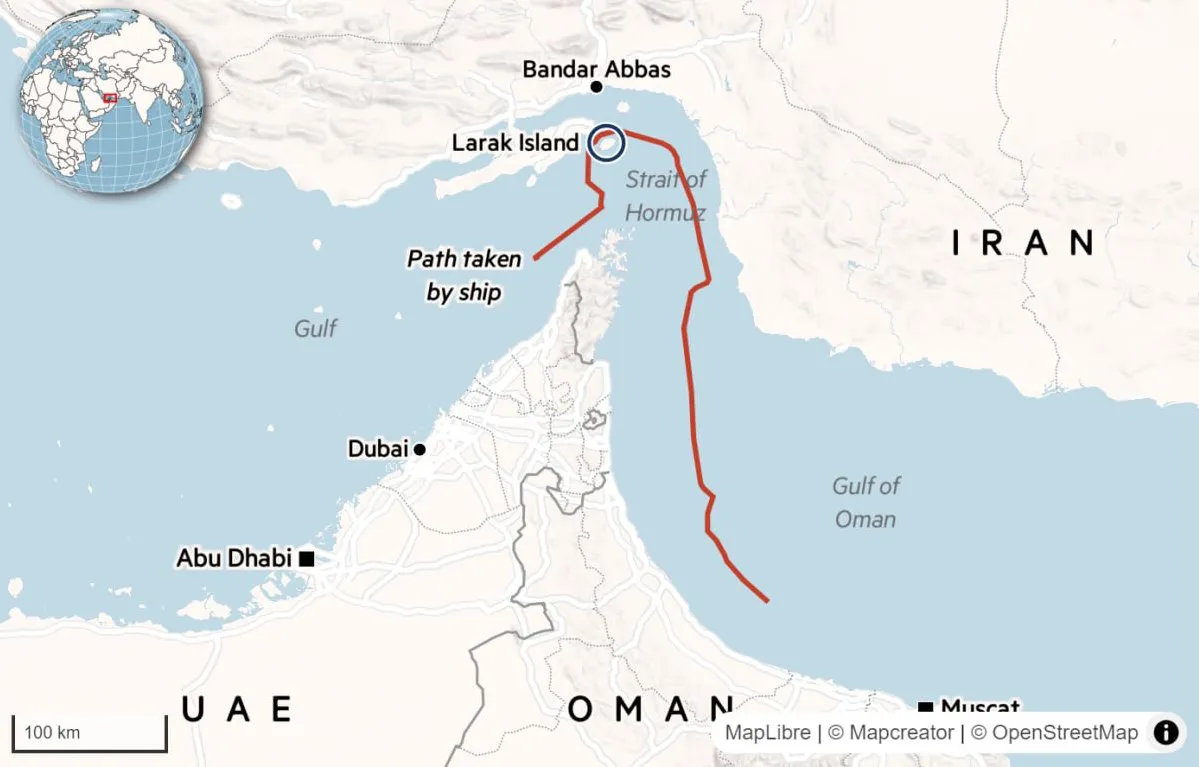
According to an analysis of MarineTraffic transponder signals, at least eight vessels have passed through the strait this week via an unusual route near Larak Island off the coast of Iran. These include oil tankers and dry cargo ships from India, Pakistan and Greece, as well as Iranian vessels. Most of them had previously called at Iranian ports, reports the Financial Times.
Lloyd’s List Intelligence reported that one of the tanker operators paid Iran $2 million for safe passage. Other vessels may have crossed the strait via the same route without their tracking systems switched on.
These movements are taking place against the backdrop of negotiations between governments, notably China and India, and Tehran regarding safe passage through the strait, through which approximately one-fifth of the world’s oil was transported prior to the conflict between the US, Israel and Iran.
Analysts note that Iran gives priority to vessels linked to trade with the country or its partner states. Current shipping volumes remain low and do not indicate a full reopening of the strait.
Iran’s former first vice-president, Mohammad Mohber, stated that once the war is over, the country plans to establish a ‘new regime’ for the use of the strait, which is intended to strengthen its position in the region and globally.
In the central part of the Persian Gulf, north of Abu Dhabi, at least nine Chinese vessels linked to the state-owned carrier Cosco are concentrated. They are likely preparing to pass through the strait.
The ongoing attacks in the region have significantly impacted shipping and the energy sector. According to S&P Global, around 3,200 vessels remain in the Gulf, whilst the number of passages through the strait has fallen by 96 per cent compared to pre-war levels of 100–135 vessels per day.
At least 22 vessels have been damaged during the war. Some were affected by attacks on energy infrastructure, whilst others were targeted directly.
In particular, one vessel was damaged during strikes on the Ras Laffan gas complex in Qatar. Following this, gas prices in Europe rose by 30 per cent, whilst oil prices rose by approximately 10 per cent, approaching $119 per barrel.
Industry representatives are warning of the risk of a prolonged energy shock should the attacks continue and access to the region be restricted.
Former British Navy commander Tom Sharp noted that damage to Iran’s radars could force ships to sail closer to the coast, allowing Iranian forces to identify them visually.
He also suggested that Iran is allowing Chinese vessels to pass through due to China’s significant role as a buyer of Iranian oil.
The industry also does not rule out the creation of a vessel passage clearance system similar to that used by the Yemeni Houthis in the Red Sea.