Iran has increased its oil revenues against the backdrop of the US-Israel conflict

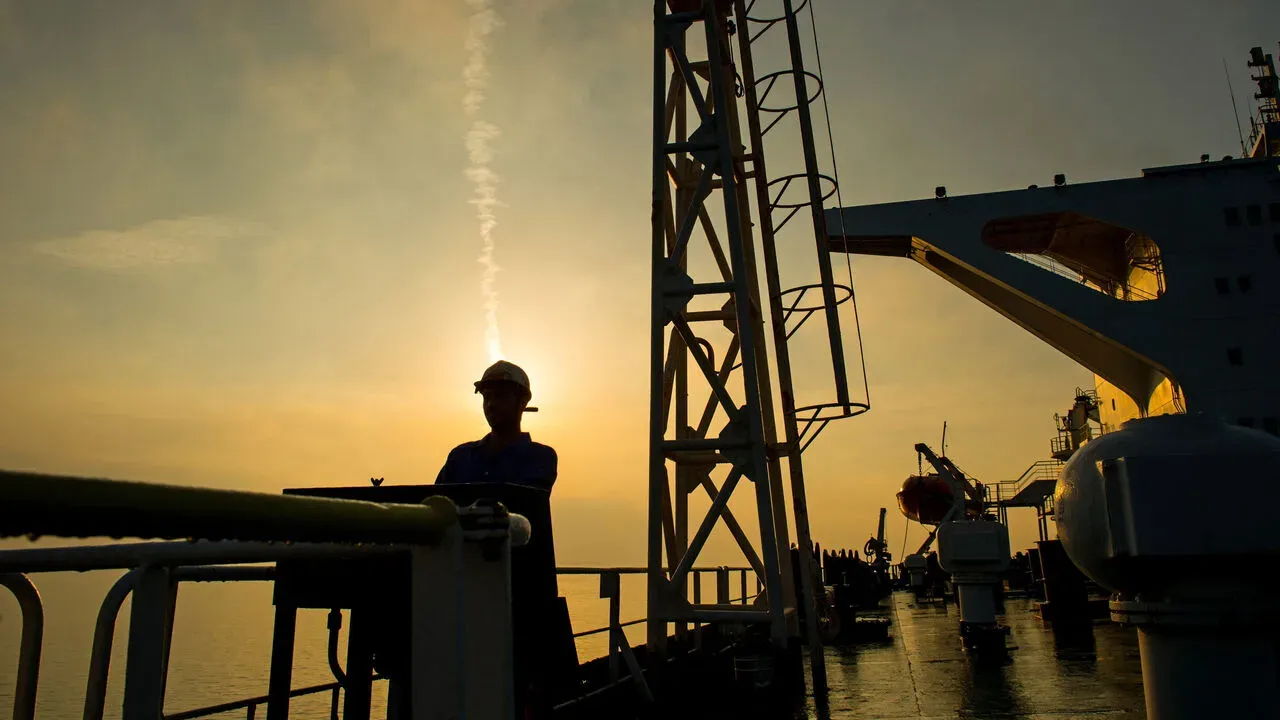
As the war in the Middle East enters its fifth week, Iran is, according to The Economist, generating almost twice as much daily revenue from oil sales as it did before the US and Israeli strikes began on 28 February.
With the Strait of Hormuz largely closed and around 15 per cent of the world’s oil unable to reach buyers, the Gulf states have cut production and lost part of their export revenues. Meanwhile, Iran has continued to transport oil through the strait.
Who controls Iranian oil exports and what are the volumes?
It is difficult to estimate the exact volumes of Iranian exports due to restrictions on satellite surveillance, electronic jamming in the Persian Gulf and the covert activities of tankers. However, a source familiar with Iran’s oil reporting stated that the country is currently exporting between 2.4 and 2.8 million barrels of oil and petroleum products per day, of which 1.5–1.8 million barrels are crude oil. According to him, this is no less than last year’s average, but at higher prices.
Iran’s oil system has become more resilient to sanctions and disruptions. A significant portion of the revenue, according to estimates, now flows to the Islamic Revolutionary Guard Corps. It is also noted that China plays an active role in facilitating the movement of these funds.
Iran’s oil business, as described by the source, rests on three pillars: sales, transportation and shadow banking mechanisms. Formally, exports are handled by the National Iranian Oil Company, but in practice, various state bodies, funds and associated traders are reportedly involved in oil sales.
Many of these individuals have links to the IRGC. According to Vortexa’s assessment, it is this organisation that is behind most of the recent growth in petroleum product exports. It is also noted that the Quds Force controls 25 per cent of crude oil production in Iran.
The main maritime logistics export hub is located on the island of Kharg, from where 90 per cent of Iranian crude oil is usually shipped, and it continues to operate under heightened security measures. In addition, the smaller terminals of Yasq, Lavan and Sirri are operational, where record stockpiles are accumulating. According to Richard Neville’s estimate, together they can handle up to 25 per cent of the volumes currently passing through Kharg.
According to the source’s interlocutor, all data on vessels, cargo, crew and destination are transmitted to the IRGC via intermediaries. After verification, the tankers receive a code to pass through the Strait of Hormuz. The article also cites data from Lloyd’s List indicating that some tankers may be paying fees running into the millions.
Despite last week’s US decision not to impose sanctions on the sale of around 150 million barrels of Iranian oil currently at sea, Iranian tankers continue to conceal the origin of their cargo using data manipulation, forged documents and other methods. Most cargoes, it is reported, are transhipped at sea near Malaysia or Singapore before the final leg of the journey.
The final destination is almost always China, which, according to estimates, absorbs over 90 per cent of Iranian oil. The main buyers are small oil refineries in Shandong province. Some of these companies have links to China’s state-owned energy entities.
Before the war, Iranian oil was sold to Chinese buyers at a discount of $18–24 per barrel to Brent. Now this discount has fallen to $7–12 per barrel. Combined with higher transport costs, this has led to Iranian Light (a grade of Iranian oil) becoming more expensive than Brent when delivered to China.
Payment system
Buyers of Iranian oil, particularly Chinese ones, transfer funds to specially opened trust accounts in small banks in mainland China or Hong Kong, registered to shell companies. The money then passes through other accounts and can be used both to purchase goods for Iran and for transfers to other countries.
Some of these funds passed through companies conducting business with plastics manufacturers in India, Kazakhstan and Turkey. It is also noted that following the exchange of intelligence between the United Arab Emirates and the US, Iran began to abandon certain financial channels and move funds to other jurisdictions.
Iran-linked accounts, which prior to the war held a combined total of $6–7 billion, began to lose funds due to attempts to transfer them to safer locations. Among the countries where, according to the source, bank accounts continue to be used, East Asian nations, the UK, Germany, Georgia, Italy and Romania were named.
Despite the increasing complexity of financial schemes and losses on the battlefield, Iran’s oil system continues to operate, and it will be difficult to halt it without large-scale strikes on energy infrastructure.