Kysilevsky reported losses of 2.8 billion from purchases from non-residents

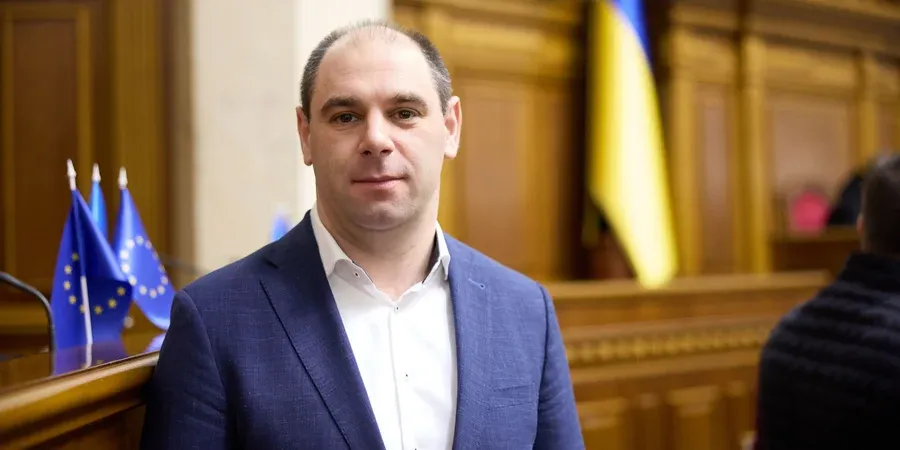
Dmytro Kysilevskyi announced this on Facebook.
Dmytro Kysilevskyi stated that the current mechanism for public procurement from non-residents results in direct financial losses for the state. According to him, the problem arises due to the difference between the hryvnia exchange rate on the date the tender winner is determined and the rate at the time of the actual payment for the goods, if the contract is denominated in a foreign currency.
He also emphasised that, in addition to direct losses, this model discriminates against Ukrainian manufacturers and resident suppliers. The reason is that the actual hryvnia price paid by the state-owned company to the non-resident on the day of payment is often higher than the rate taken into account when determining the winner. As a result, another participant could have won the contract if the calculation had been based on the actual value on the day of payment.
Who has lost the most
According to the study cited by Kysilevsky, the largest losses due to exchange rate differences in settlements with non-resident contractors for the years 2022–2025 were recorded by NAEK “Energoatom” – 1.59 billion UAH, “Ukrgazvydobuvannya” – 671 million UAH, and “Ukrzaliznytsia” – 352 million UAH.
The study was conducted by the State Institute for Informatisation and Economic Modelling. It covered 511 procurements made from non-resident companies totalling 124.5 billion UAH. The sample included nine major customers: Energoatom, Ukrgazvydobuvannya, Ukrzaliznytsia, Medical Procurement, Ukrtransnafta, Ukrnafta, Ukrenergo, Ukrhydroenergo and Forests of Ukraine.
Kysilevsky also drew attention to indirect losses. According to him, Ukrainian resident manufacturers and suppliers pay taxes in Ukraine, whereas non-resident suppliers do not. That is why, in his view, the problem concerns not only exchange rate differences but also budget losses.
According to the MP, the data on purchases from non-residents was provided by the company in response to his parliamentary inquiry. The findings of the study were presented at a meeting of the working group on the operational handling of public procurement issues relating to localisation, attached to the Verkhovna Rada Committee on Economic Development.
As a reminder, on 7 April, the Verkhovna Rada adopted in the second reading and as a whole draft law No. 15110, which extends the military levy for a further three years after the termination or cancellation of martial law. The document was voted for by 257 MPs.