China has begun construction of a 100 GW "Solar Wall" in the desert

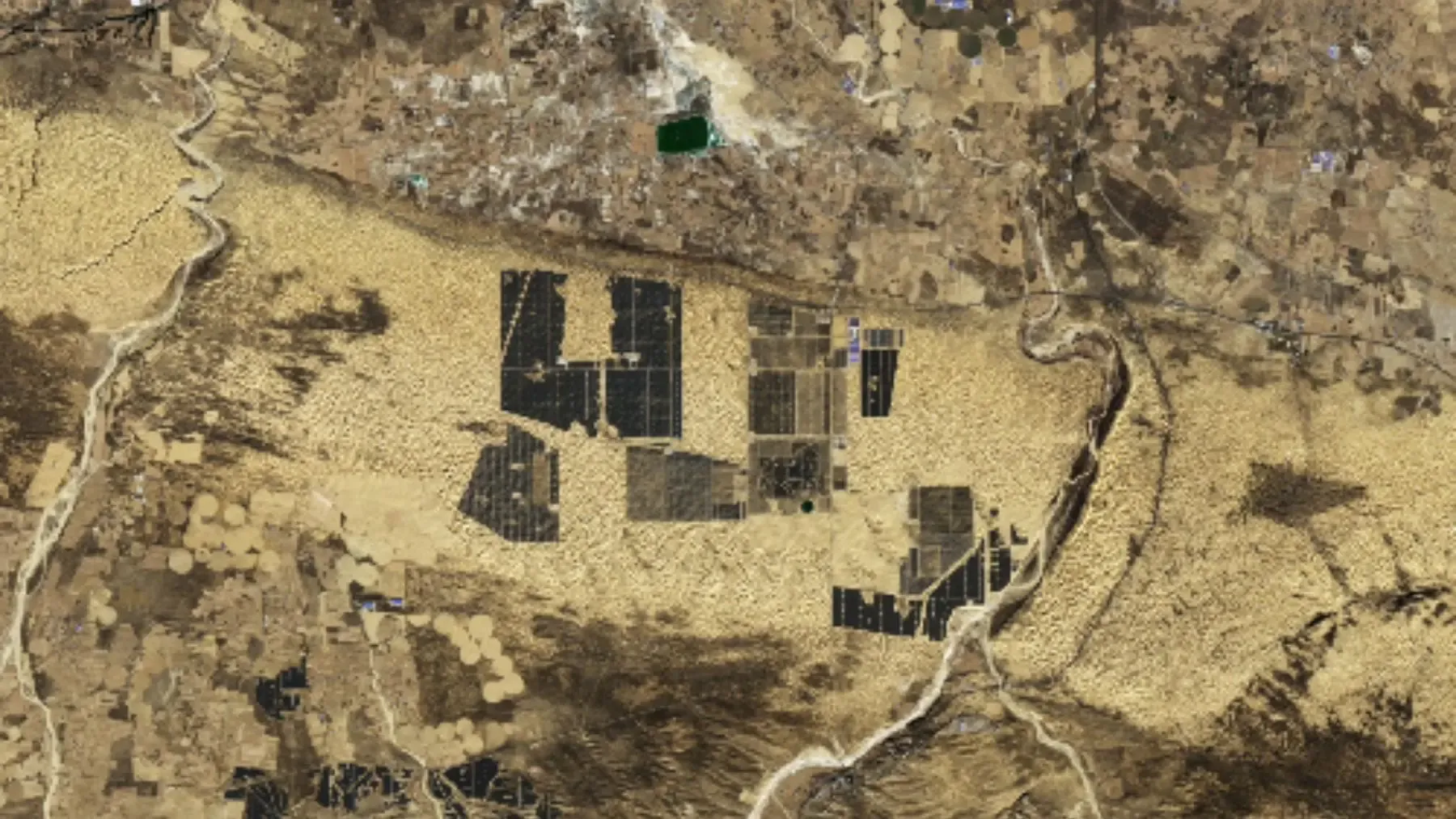
China has begun construction of a large-scale solar complex in the Kubuqi Desert in the north of the country, which has already been unofficially named the "Great Solar Wall." The project involves the installation of about eight million panels with a total capacity of 100 gigawatts and will be the next stage in the rapid growth of renewable energy in the country.
According to Global Energy Monitor, China added 278 gigawatts of solar generation in 2024 alone, and nearly 200 gigawatts in the first five months of 2025. By mid-2025, the total installed capacity of solar energy in the country exceeded 1 terawatt. The new desert megaproject is expected to cement China's leadership in the global energy transition.
The "solar wall" will stretch for almost 133 kilometres in length and up to 25 kilometres in width. According to developer Ordos Energy, the complex will be able to generate enough electricity to meet Beijing's needs. By 2030, annual generation is expected to reach 180 billion kWh, and a new power line will allow approximately 48 billion kWh to be supplied to the Beijing-Tianjin-Hebei region each year.
The project has not only an energy impact, but also a social and environmental one. By 2030, its implementation will create approximately 50,000 jobs. Solar panels will also help slow down desertification near the Yellow River. They will reduce moisture evaporation over an area of about 27 million hectares, serve as wind protection against soil erosion, and more than 2,400 hectares in the driest areas are planned to be planted with crops.
Thus, the region, formerly known as the "Sea of Death," is gradually transforming into a key energy hub. By 2026, China plans to launch another 7-gigawatt desert project, which will further strengthen the role of renewable energy in the national balance.
Source and photo: Energiesmedia