Types of mines and munitions, and what to do in case of danger

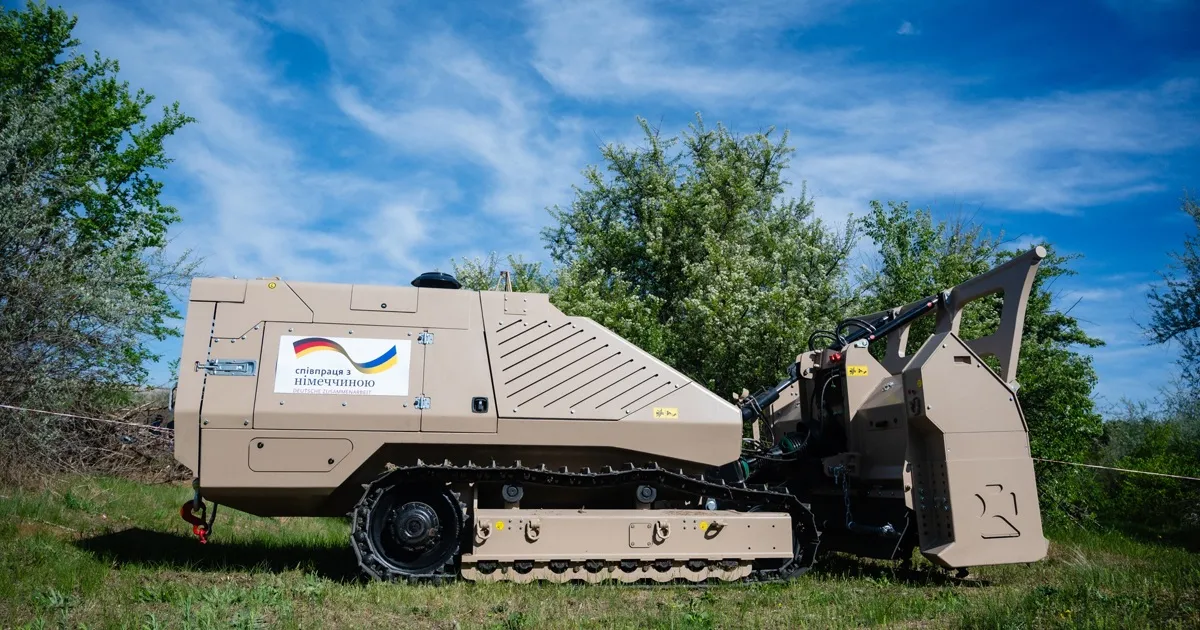
According to preliminary estimates, 137,000 square kilometres of Ukraine remain potentially mined, accounting for around 23% of the country’s territory and equivalent to the combined area of Bulgaria and Belgium. In the formerly occupied territories and in areas where fighting took place, mines and unexploded ordnance, including cluster munitions, are still being found. Ukrainian rescue workers are constantly carrying out demining operations in such areas.
The State Emergency Service of Ukraine is conducting demining operations in de-occupied and frontline territories and urges citizens to exercise the utmost caution.
The State Emergency Service emphasises that following shelling, thousands of munitions remain active, and mines and other explosive objects may be found in abandoned buildings, on streets, in fields, forests, on roadsides and even on playgrounds.
The UN has named Ukraine one of the most heavily mined countries in the world. Ukrainian bomb disposal experts and rescue workers defuse between 2,000 and 6,000 shells and mines every day.
Anti-personnel high-explosive mines
Anti-personnel high-explosive mines are small plastic devices used to kill or injure people through the force of an explosion. These mines operate on a pressure-activated principle. They detonate when a person steps on the explosive device. Injuries most commonly affect the limbs.
The ‘Metelyk’ mine, also known as the ‘Petal’, poses a particular danger. It measures around 12 centimetres and weighs approximately 80 grams.
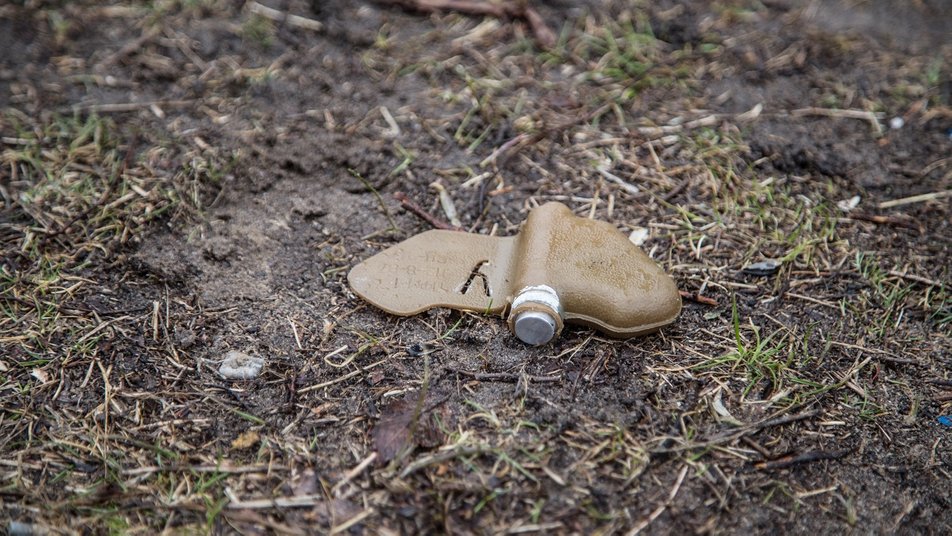
Such mines are dispersed from cluster munitions. They can detonate on contact or have a time fuse, meaning they are capable of detonating automatically after several hours.
Anti-personnel fragmentation mines
Fragmentation mines cause injury not through the force of the explosion, but through the fragments contained within the casing. They can be buried in the ground or concealed in trees. Such mines explode if a person trips a tripwire or if the device is remotely activated. The fragments can scatter either in a single direction or in all directions.
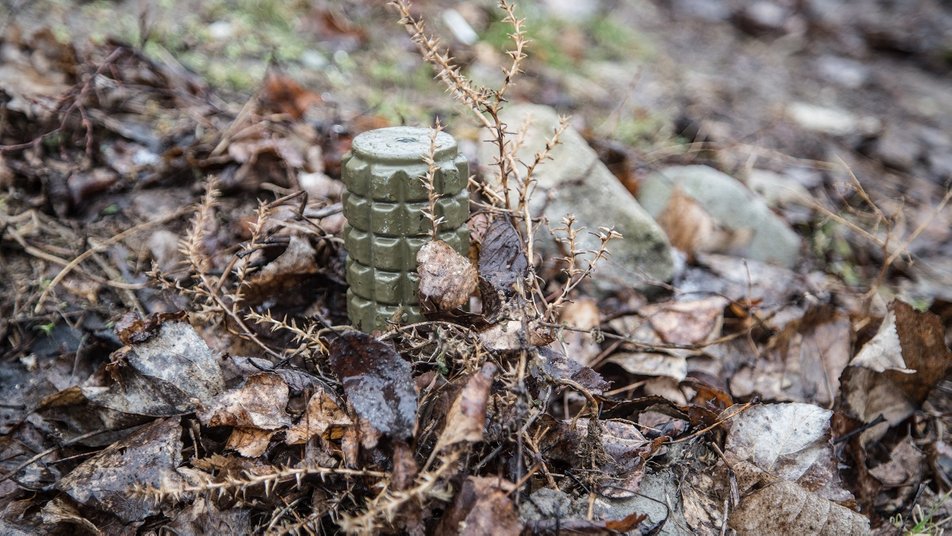
The State Emergency Service identifies the OZM-72 as one of the most dangerous fragmentation mines. It contains 2,400 fragments that scatter over a distance of up to 50 metres. The service explains that upon tripping the tripwire, the mine jumps approximately one metre into the air before exploding.
Anti-personnel mines have been banned under the Ottawa Convention since 1999.
Anti-vehicle mines
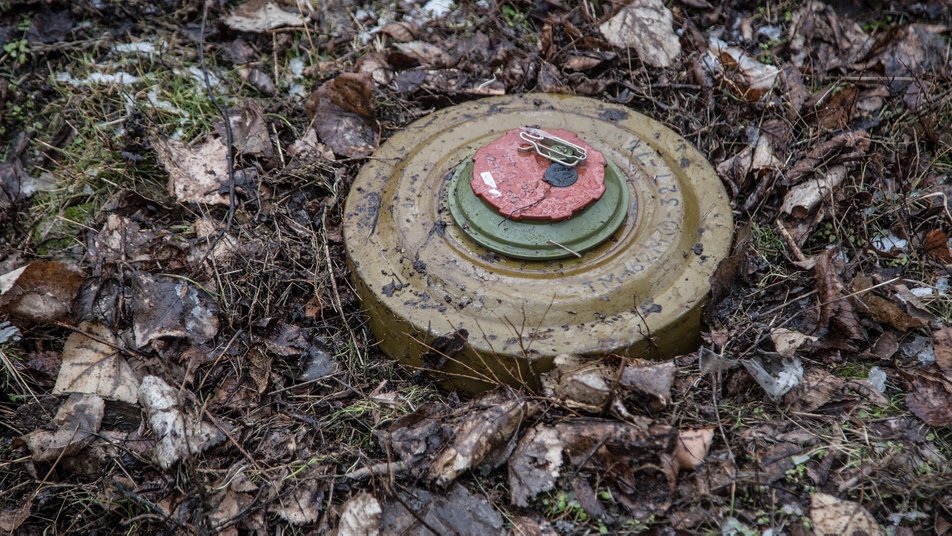
Anti-vehicle or anti-tank mines are buried in the ground or left on the surface. Such mines detonate under a weight of 120 kilograms. The State Emergency Service emphasises that they must not be touched under any circumstances. The service also warns that anti-personnel mines may be placed beneath anti-vehicle mines.
Cluster munitions
Cluster munitions may include those used in the ‘Grad’, ‘Smerch’, ‘Uragan’ multiple launch rocket systems and the ‘Tochka-U’ complex. Inside such a munition are dozens of smaller submunitions, which scatter over an area of several hectares. These submunitions are approximately 12 centimetres in size and are equipped with a self-destruct mechanism.
Cluster munitions have been banned by an international convention since 2010.
Homemade explosive devices
Homemade explosive devices may be hidden in everyday items, vehicles or inside buildings. They vary in size, colour and weight, and their mode of operation can differ. The State Emergency Service emphasises that you must not touch suspicious bags, parcels or boxes, as such items are often disguised as ordinary household items.
Homemade devices are often fitted with timers.
Fuses and detonators
Fuses and detonators are also dangerous as they contain explosive material.
The State Emergency Service explains that it is these components that trigger the explosion of a mine or grenade. It is dangerous to touch, dismantle or unscrew such items.
Unexploded ordnance
Unexploded ordnance, including grenades, mines, tank shells and rocket-propelled grenades, also poses a danger.
The State Emergency Service emphasises that even if an explosive device has not detonated after being fired, it remains active and could detonate at any moment.
The service notes that around 20% of fired shells do not detonate immediately.
What to do if you see an explosive object
If you come across a piece of ordnance, you must stop, carefully survey the area, move to a safe distance of approximately 300 metres and call the State Emergency Service on 101, 102 or 112. Under no circumstances should you attempt to move, lift or defuse it yourself. If there are no people or a phone nearby, experts advise retracing your steps out of the danger zone or moving very carefully across a firm, level surface.
If you spot a dangerous object, you should:
- move to a safe distance of at least 100 metres;
- warn other people;
- mark the spot where you found it with a stick, clothing or stones;
- call the police or the State Emergency Service on 101, 102 or 112.