The cost of the war with Iran exceeds $1.3 million per minute


The Pentagon has requested $200 billion to fund a war with Iran, which amounts to over $1,400 per household in the US. However, this figure does not reflect the full cost of the conflict.
Linda Bilmes, an expert on the financing of wars, notes that a significant portion of the costs will arise later. In particular, service personnel who sustain injuries or develop health problems will be entitled to lifelong medical care and benefits. She estimates that these liabilities alone could cost at least $600 billion. In total, the costs could exceed $1 trillion.
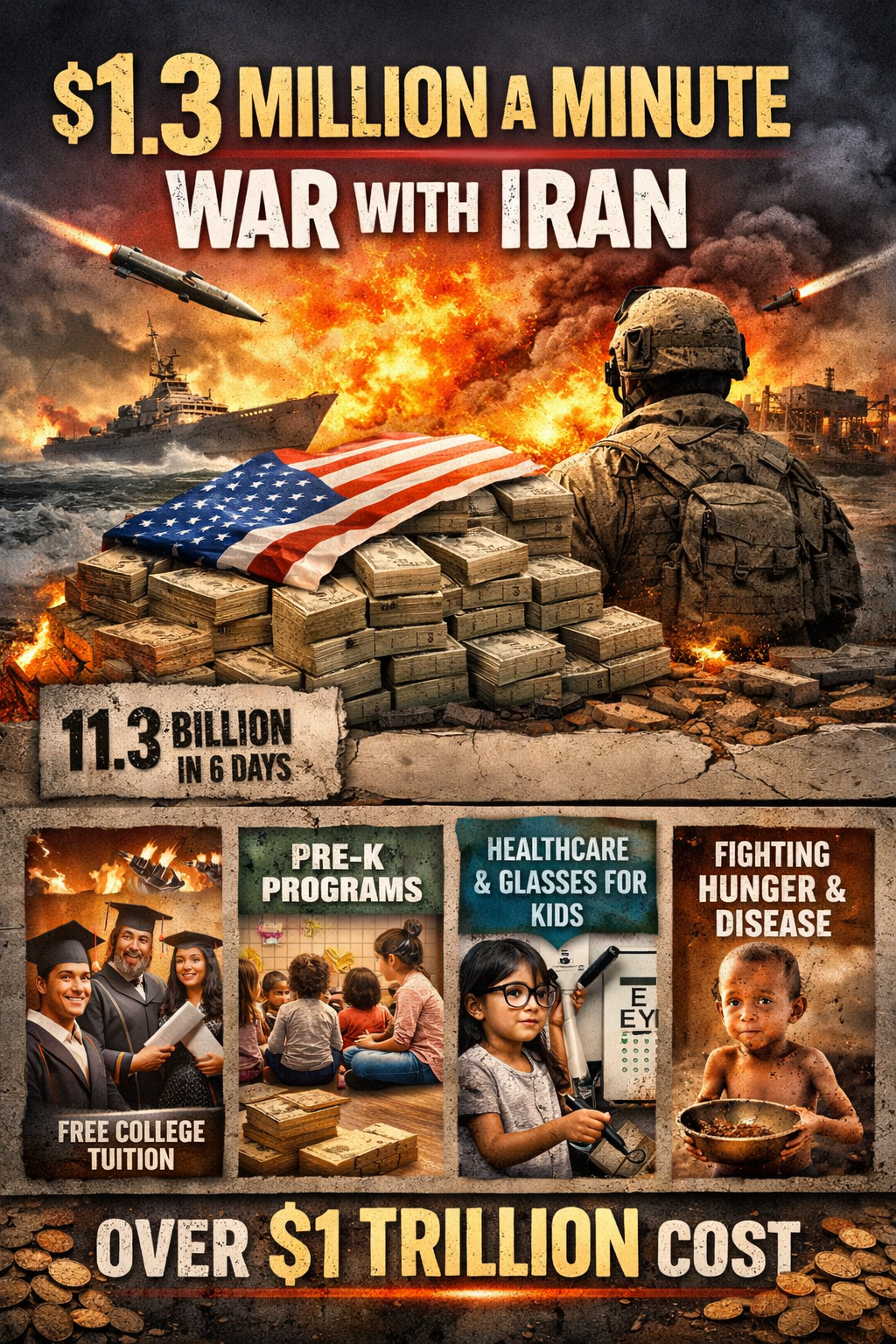
According to the Pentagon, $11.3 billion was spent in the first six days of the war. That is over $1.3 million per minute. This is reported by The Public, citing the NYTimes.
The article provides examples of what such funds could have been used for. The cost of just over two weeks of the war could have funded free higher education for American families with an annual income of up to $125,000. In less than three weeks, the expenditure could have funded a nationwide pre-school education programme.
Spending equivalent to roughly one hour of the war would allow free books to be provided to children from low-income families. In less than 13 hours of spending, cervical cancer screenings for women without health insurance could be funded.
It is also noted that for around $300 million, over 2.3 million schoolchildren from low-income families could be provided with glasses. This is roughly four hours’ worth of war expenditure.
Restoring health insurance subsidies that had previously been scrapped would cost around $34 billion a year. That is less than three weeks’ worth of war spending.
Part of the funds could be channelled into international programmes. It is noted that more was spent in the first three days of the war than the total humanitarian aid for 2025, which amounted to $4 billion.
In less than six hours’ worth of spending, children worldwide could be dewormed. For the cost of less than five hours, 190 million children could be provided with vitamin A, which would prevent up to 480,000 deaths each year.
The cost of a single day of the war could help save over 350,000 people from malaria. For less than the cost of three days, the most severe form of malnutrition could be largely eliminated, saving around 1.5 million children every year.
The article notes that cost estimates can change, as was the case with the Iraq War, which was estimated at $40 billion in 2003 but later reached approximately $3 trillion.
It is noted that even the $1 trillion estimate does not take into account indirect costs, including rising prices for fuel, fertilisers and food.