The "Sea Trident", capable of striking strategic targets in the Russian Federation, has been unveiled in Ukraine

Boris Bodnar
Boris Bodnar Journalist
The "Sea Trident", capable of striking strategic targets in the Russian Federation, has been unveiled in Ukraine
The "Sea Trident" drone
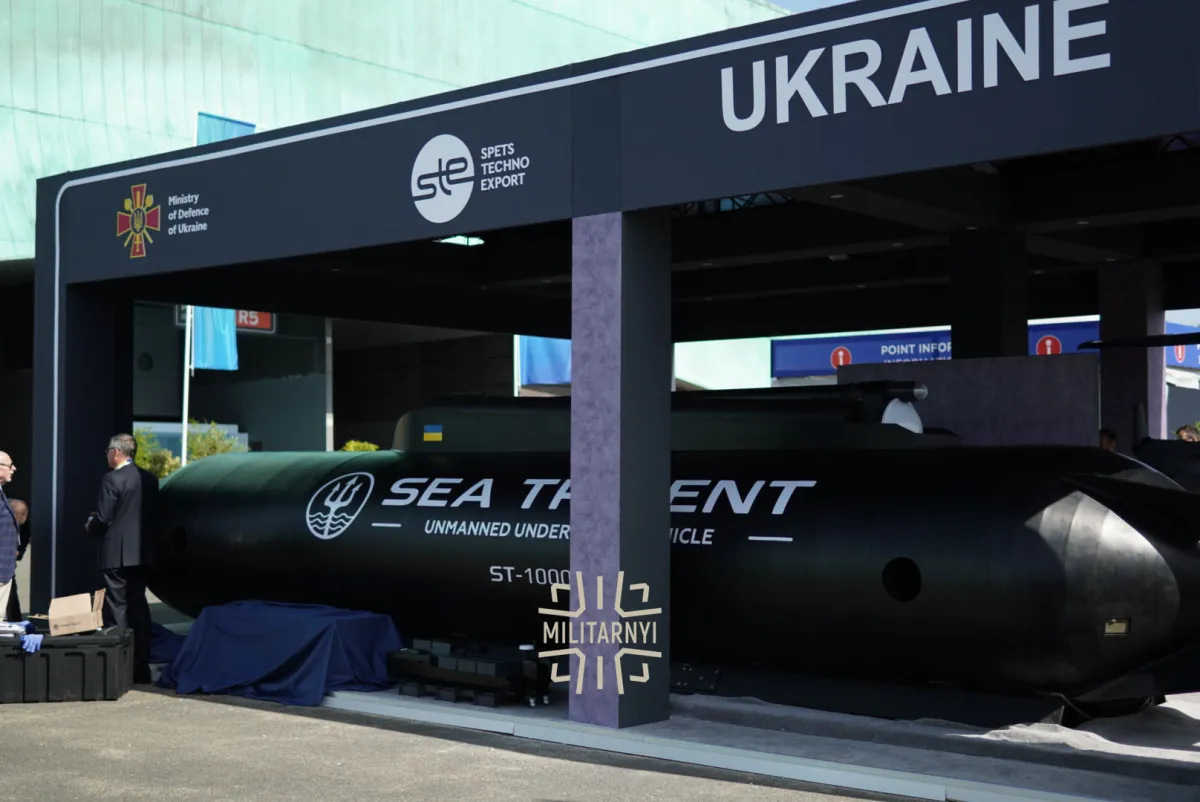
Ukraine has developed a unique underwater drone, the Sea Trident, capable of covertly striking strategic targets over vast distances. This development could radically alter the balance of power in the Black Sea.

This was reported by the Military portal.

The Ukrainian company Global Mark presented its development at a prestigious defence exhibition in France. The Sea Trident has been adapted for operations requiring complete autonomy.

The drone operates underwater, making it almost invisible to enemy radar. Its main purpose is covert infiltration into enemy maritime zones.

The Sea Trident is capable of carrying payloads weighing up to 1,000 kg. This allows it to be used as a powerful weapon against large ships or coastal infrastructure.

The drone’s capabilities are not limited to explosions. The developers have envisaged a wide range of applications for the technology.

The Sea Trident’s main missions include:

  • conducting precision strike operations;
  • logistics and the delivery of special cargo;
  • intercepting enemy submarines;
  • neutralising underwater threats.

Ukraine has unveiled the “Sea Trident”, capable of striking strategic targets in the Russian Federation. The Sea Trident underwater robot is capable of stealthily infiltrating enemy ports (photo: Military Portal)

The drone is equipped with fully autonomous control systems. It features adaptive navigation, allowing the vehicle to chart its own course and make decisions whilst carrying out its mission.

Technical specifications and range of the Sea Trident

The Sea Trident’s specifications set it apart from its counterparts. The vehicle has an enormous range of 3,218 kilometres (2,000 miles). This allows it to carry out extremely long missions without the need for additional support vessels.

Key project figures:

  • vehicle weight – 10,000 kg;
  • hull length – 10 metres;
  • width – 2 metres;
  • height – 1.5 metres.

The drone moves quite quickly for an underwater vehicle. Its maximum speed is 18.5 km/h, whilst its cruising speed is slightly lower at 11 km/h.

The underwater drone operates at depths of up to 60 metres – an optimal range for effective operation in coastal areas. Thanks to these parameters, the drone can remain undetected by surveillance systems designed to detect surface targets.

Follow us on Telegram
Share tittle
War
An oil depot caught fire following a drone attack in the Krasnodar Region
War

An oil depot caught fire following a drone attack in the Krasnodar Region

In Russia’s Krasnodar Krai, a fire broke out at an oil depot following a drone attack on the night of 16 June. The blaze started at the facility in the village of Poltavskaya.

16.06.2026
Russian attacks in various regions of Ukraine have resulted in deaths, injuries and destruction
War

Russian attacks in various regions of Ukraine have resulted in deaths, injuries and destruction

During the night of 16 June and over the past 24 hours, Russian forces have attacked a number of regions in Ukraine using drones, artillery and other weapons. There have been fatalities and injuries, and significant damage to civilian infrastructure.

16.06.2026
An oil refinery is on fire in Moscow following a drone attack
War
  • Important

An oil refinery is on fire in Moscow following a drone attack

Drone attacks were reported in the Moscow Region and the Russian capital on the morning of 16 June. This was followed by reports of a fire at the Moscow Oil Refinery in the Kapotnya district.

16.06.2026
There were 228 combat engagements on the front line over the past 24 hours
War

There were 228 combat engagements on the front line over the past 24 hours

Over the past 24 hours, Russian troops have carried out 228 attacks across various sectors of the front line. The enemy’s most intense activity was recorded in the Pokrovsk, Lyman and Huliaipole sectors.

16.06.2026
Russia lost 1,230 troops and seven air defence systems on the front line over the past 24 hours
War

Russia lost 1,230 troops and seven air defence systems on the front line over the past 24 hours

Russian military casualties in the war against Ukraine have risen by a further 1,230 soldiers over the past 24 hours. The Defence Forces have also destroyed seven air defence systems and dozens of other pieces of equipment.

16.06.2026