Ukraine is not prepared for major floods: an audit has revealed critical problems

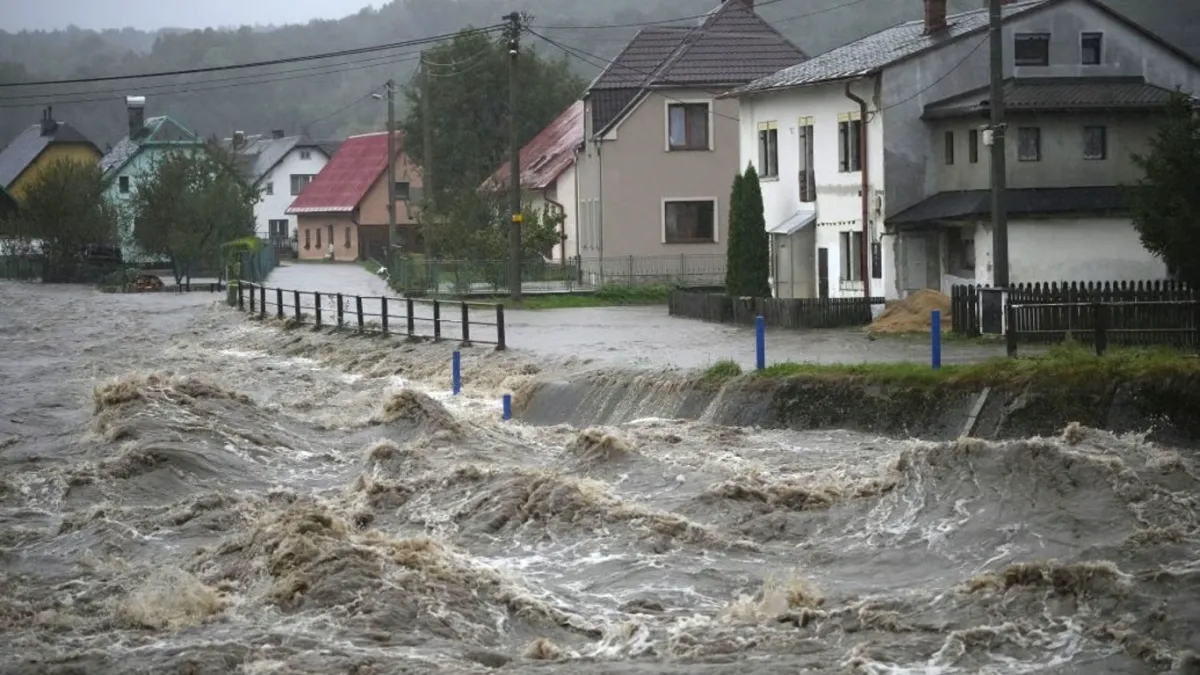
This is reported by the Audit Office in its Report on the Results of the Performance Audit ‘Flood Management — An Assessment of the Use of Hydrometeorological Data for Disaster Preparedness’.
What the audit revealed
The auditors note that Ukraine lacks a single, comprehensive flood management mechanism. Although there are individual government programmes, forecasting, warning and response systems, they do not operate in a sufficiently coordinated manner. As a result, the authorities are not always able to make decisions promptly or coordinate their actions effectively.
According to the audit, 13 flood-related emergencies occurred in Ukraine between 2022 and 2025. These resulted in 10 fatalities, with damages estimated at over 140 million UAH. Meanwhile, 239 areas across the country have been identified as having potentially significant flood risks.
Infrastructure is critically dilapidated
The audit identifies the condition of flood defence infrastructure as one of the main problems.
The average level of wear and tear stands at 86 per cent, and around 70 per cent of such facilities are in a critical technical condition. The situation is most critical in the Zakarpattia and Ivano-Frankivsk regions, where the likelihood of flooding is traditionally the highest.
At the same time, between 2023 and 2025, only 33 per cent of the measures set out in the flood risk management plans were implemented, and work to restore flood defence infrastructure amounted to just 9 per cent of the planned volume. The auditors also found that only 8.5% of the required funding had been utilised, whilst a portion of the budget funds already allocated remained unspent.
Only some settlements are protected
According to the audit findings, over the last three years, protection against the harmful effects of water has been provided for only 50 of the 220 settlements in need of such protection. This represents just 23 per cent of the total requirement.
As a result, a significant number of communities remain vulnerable to flooding, damage to infrastructure and significant economic losses.
Warnings do not always help to prevent the consequences
The Audit Office noted that the flood forecasting system is ineffective.
Warnings about hazardous weather events often lack sufficient detail regarding specific settlements and the possible consequences. As a result, local authorities frequently receive information too late or do not have enough time to prepare for an emergency.
In some cases, meetings of the commissions on industrial and environmental safety and emergencies were held only after the flood had occurred, rather than to prevent it.
The monitoring system has lost some of its capabilities
Following the outbreak of full-scale war, Ukraine lost part of its hydrometeorological network.
The number of weather stations fell by 28 per cent, hydrological stations by 22 per cent, and in 2022 the country’s only modern Doppler weather radar – which provided coverage for approximately 15 per cent of the country’s territory – was destroyed.
Furthermore, between 2022 and 2025, only 22 per cent of the equipment required for hydrometeorological observations was procured, meaning that some measurements are still carried out manually.
The population is not sufficiently prepared for emergencies
Separately, the auditors assessed the state’s preparedness to respond to floods.
Only 8 out of 24 regions have commissioned modern regional early-warning systems. Local systems have been modernised in only 12% of local communities.
At the same time, the State Emergency Service’s operational material reserve amounts to only 12 per cent of the approved requirement, regional reserves to 54 per cent, and local reserves to 48 per cent.
Furthermore, the general level of public awareness regarding actions to take during emergencies stands at just 11 per cent, although the government’s target for 2030 is to reach 90 per cent.
Following the audit, the Audit Office recommended that the government establish a unified mechanism for flood risk management, modernise the hydrometeorological network, speed up the upgrading of warning systems, carry out an inventory of flood defence infrastructure, and ensure adequate funding for measures to protect the population from flooding.
Follow us on Telegram