In Russia, farmers are warning of risks to the grain harvest due to a shortage of diesel fuel

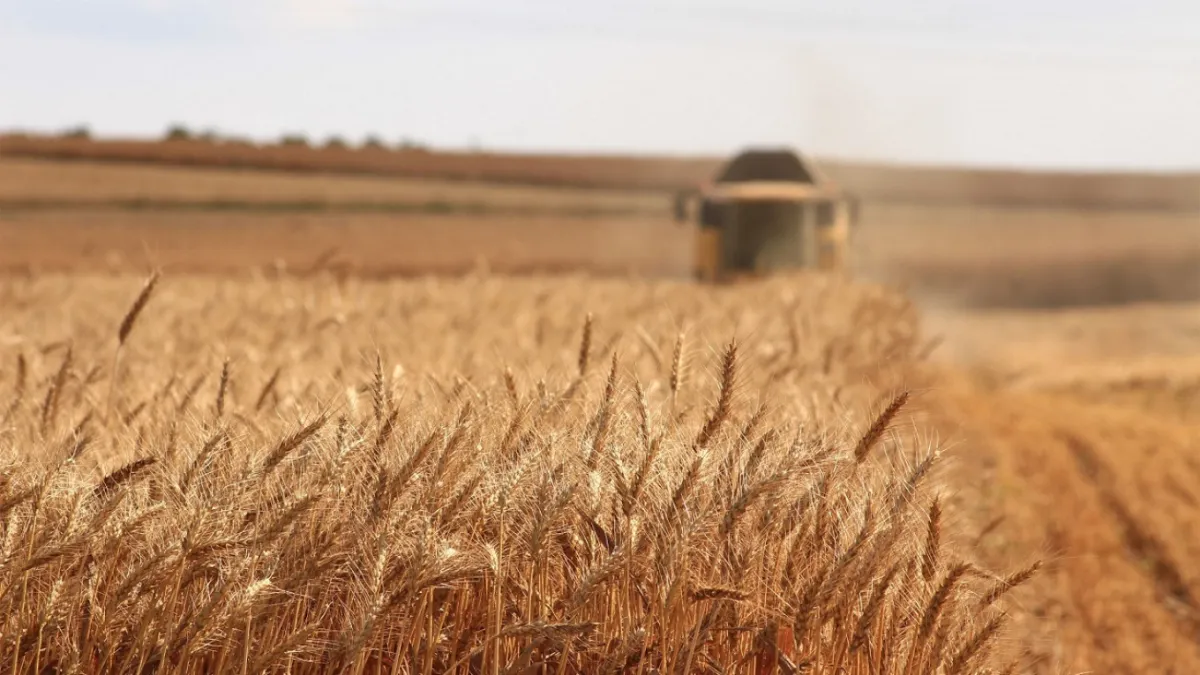
The 2026 harvest campaign in Russia is taking place against a backdrop of a diesel fuel shortage, restrictions on its sale and rising prices. According to Forbes, citing market participants, the greatest difficulties have arisen in the Rostov Oblast and the Krasnodar and Stavropol Krais, which account for around a fifth of the country’s total grain harvest, reports TMT.
According to one farmer working in the Krasnodar Krai, diesel fuel can only be found on the M4 federal motorway. People are forced to wait at petrol stations for fuel tankers to arrive, sometimes staying there overnight. Many petrol stations have imposed limits on fuel sales of up to 100 or 200 litres per customer, whilst a single combine harvester consumes up to 300 litres per shift. A source speaking to the publication noted that many farmers are reluctant to venture out into the fields without being certain that diesel fuel will be delivered on time.
In Crimea, according to a representative of one of the organisations operating on the peninsula, agricultural machinery is effectively idle due to a lack of fuel. In the Rostov Region, where around 10 million tonnes of grain are harvested each year, farmers are already talking about a potential loss of up to 15 per cent of the harvest. This was reported by Vladimir Poklad, director of the management consultancy practice at the ‘Delovoy Profil’ group.
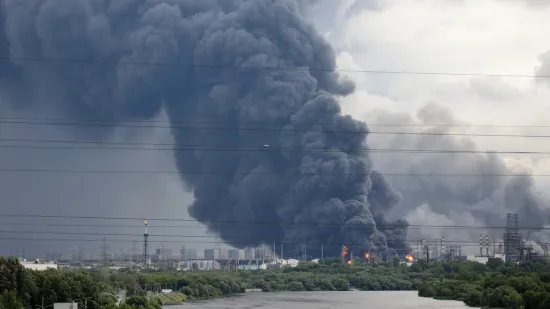
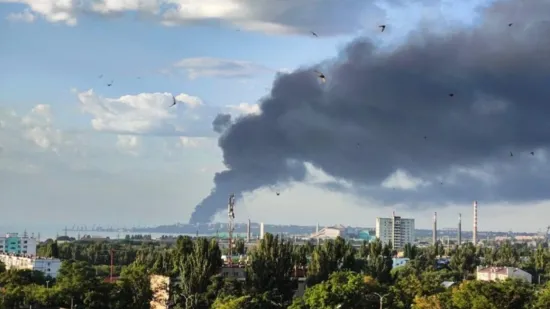
The report notes that following attacks on oil refineries – all ten of Russia’s largest refineries have been targeted over the past two months – diesel production has fallen by almost 40 per cent, whilst refinery utilisation rates have fallen to their lowest level since the early 2000s.
An employee at one of the agricultural enterprises in the Sverdlovsk region told Forbes that diesel fuel stocks would last for about a month, whilst the situation beyond that remains uncertain. According to him, officials are currently only drawing up schedules of fuel requirements and supply capabilities, whilst farmers do not understand how the problem will be resolved.
In Yakutia, restrictions have also been introduced on the sale of diesel fuel, limiting purchases to 200 litres per person. Due to the vast distances involved, farmers have to travel hundreds of kilometres to obtain a quantity of fuel that is sufficient for just one day’s work.
According to Volodymyr Poklad, the situation is even more difficult for small and medium-sized farms that do not have their own fuel reserves. Current reserves are sufficient for approximately two weeks of field work, after which farmers are forced to buy diesel fuel on the spot market at higher prices.
Andriy Syzov, director of the ‘Sovecon’ analytical centre, noted that once the grain has ripened, there are only seven to ten days left to harvest it. If this window is missed, the grain will begin to fall off the stalks, and in the event of rain, the combine harvesters will be unable to work in the fields.
According to Sovecon, as of 1 July, between 1.3 and 1.5 million hectares had been threshed in Russia, which is approximately three times less than during the same period last year, when the figure stood at 4.2–4.6 million hectares.