The Rada has extended the military levy for three years following the lifting of martial law

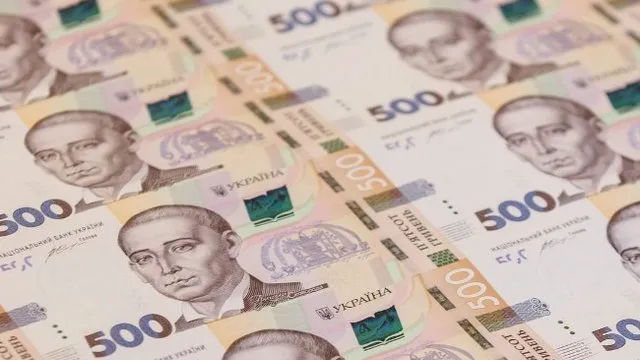
This is evident from the details of the draft law on the Verkhovna Rada website.
The bill in question is No. 15110, “On Amendments to Paragraph 16-1 of Subsection 10 of Section XX ‘Transitional Provisions’ of the Tax Code of Ukraine Regarding the Collection of the Military Levy”, which the government registered on 30 March. On 7 April, the relevant committee recommended that the Rada support it in principle and as a whole, taking into account the proposals, after which parliament adopted the document.
During the presentation of the draft law, Finance Minister Serhiy Marchenko stated that extending the military levy would enable the state budget to raise over 140 billion hryvnias over three years following the end of martial law. Following the vote, the Ministry of Finance clarified that this involves maintaining the current rates to finance the defence sector and fulfil Ukraine’s international obligations to the IMF.
The law retains the current model of the military levy, which was introduced for the period of martial law. For individuals, the rate remains at 5%. For sole traders – single tax payers in groups 1, 2 and 4 – the rate is set at 10% of one minimum wage as of 1 January of the current month, and for single tax payers in group 3 – 1% of income.
Separately, MPs voted 250 in favour of urgently sending the law to the President for signature. The adoption of this document was included in the list of structural milestones of the new Extended Fund Facility (EFF) programme with the International Monetary Fund. Other tax initiatives submitted by the Cabinet of Ministers at the end of March, particularly regarding digital platforms, parcels and VAT for sole traders, remain separate issues.
As a reminder, Ukrainian boxer Oleksandr Usyk received a record $132 million for his victory over Daniel Dubois. However, a significant portion of this sum will go towards paying taxes.