Zelensky reveals details of 20 points of draft basic peace agreement

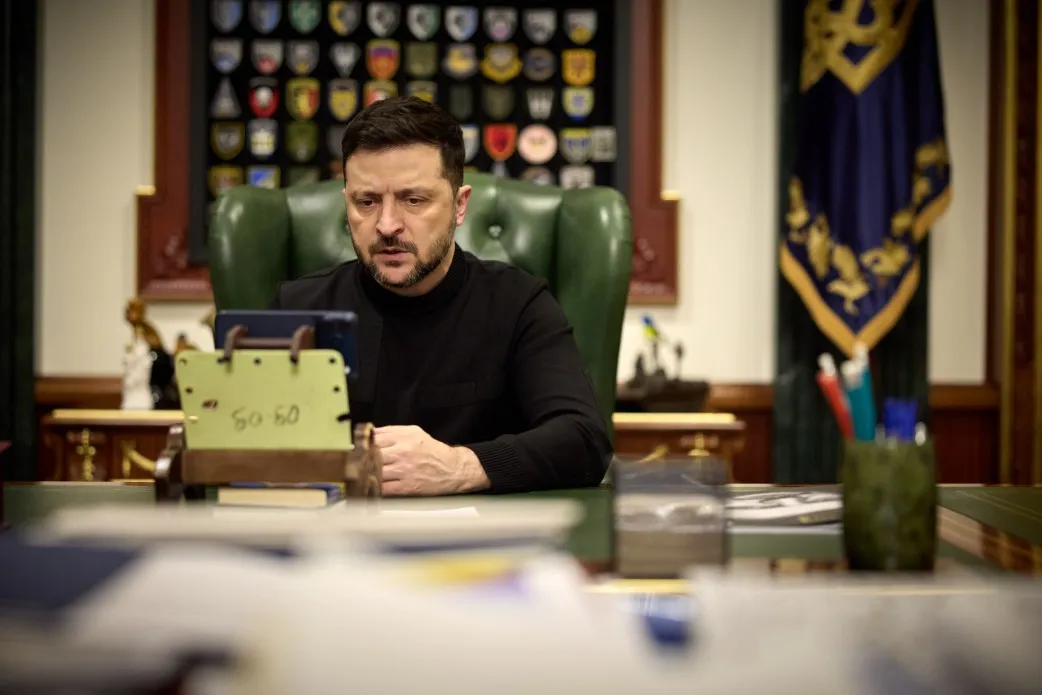
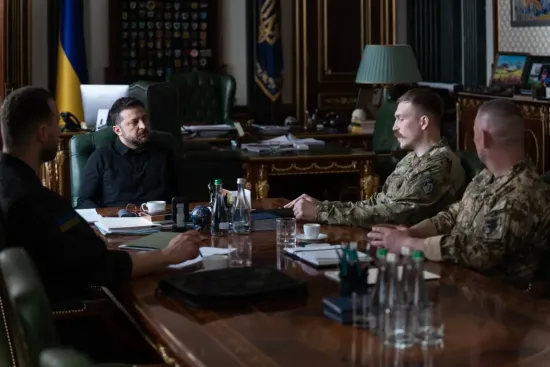
President Volodymyr Zelenskyy on 24 December, during a conversation with journalists, made public the key provisions of the draft basic document on ending the war. It is a political framework agreement between Ukraine, the United States, European partners and Russia, which currently consists of 20 points and is being negotiated.
According to the Head of State, the document largely reflects the common Ukrainian-American position, partially the American one, and a number of issues still need to be finalised. At the same time, the parties have made significant progress towards finalising the agreements.
The key points of the draft include the reaffirmation of Ukraine's sovereignty, a full non-aggression agreement between Ukraine and Russia, and the creation of a mechanism for monitoring the contact line using modern surveillance technologies. The document envisages providing Ukraine with strong security guarantees from the United States, NATO and European states, which should be in line with the principles of Article 5 of the North Atlantic Treaty.
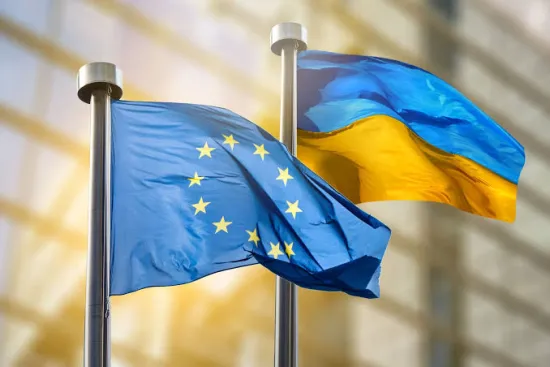
The draft also states that the number of the Armed Forces of Ukraine in peacetime will be 800 thousand military personnel, and Ukraine confirms its status as a non-nuclear weapon state. It also mentions Ukraine's course towards membership in the European Union with a defined timeframe and short-term privileged access to the EU market.
The economic section of the document envisages the creation of several funds for the recovery and reconstruction of Ukraine with the overall goal of attracting up to USD 800 billion through grants, investments, debt instruments and private sector funds. Following the signing of the agreement, Ukraine plans to accelerate the conclusion of a free trade agreement with the US.
The most sensitive issues are territorial issues and the future status of the Zaporizhzhya nuclear power plant. The territorial point has several options, including fixing the contact line or creating a demilitarised economic zone in Donbas, which in some cases would require an all-Ukrainian referendum. According to Zelenskyy, final decisions on these issues are possible only at the level of state leaders.
The document also provides for the exchange of all prisoners of war and the return of civilian hostages, the demilitarisation of the Kinburn Spit, freedom of navigation in the Black Sea and the holding of elections in Ukraine after the signing of the agreement. The implementation of the agreements is to be monitored by the Peace Council chaired by US President Donald Trump, and an immediate ceasefire is expected to be in place once all the points are agreed upon.
The President said that on 24 December, the Russian side is expected to respond after consultations with the US administration, which will determine further steps and possible timeframes for negotiations. In addition to the framework agreement, Ukraine, together with its partners, has worked out separate documents on security guarantees and the Roadmap for the restoration and economic development of the country.
Point 1
Ukraine is a sovereign state, and all signatories of the agreement confirm this with their signatures.
Paragraph 2
This document constitutes a complete and unequivocal non-aggression agreement between Russia and Ukraine. To support long-term peace, a monitoring mechanism will be established to control the line of contact.
Paragraph 3
Ukraine will receive strong security guarantees.
Point 4
The size of the Armed Forces of Ukraine will remain at the level of 800 thousand in peacetime.
Paragraph 5
The US, NATO and European signatories will provide Ukraine with security guarantees, similar to Article 5.
If Russia invades Ukraine, there will be a military response and renewed sanctions. If Ukraine invades Russia or opens fire on Russian territory without provocation, the security guarantees will be cancelled. If Russia opens fire on Ukraine, the security guarantees will come into force.
Paragraph 6
Russia will enshrine its non-aggression policy towards Europe and Ukraine in all necessary laws, including ratification by an overwhelming majority in the State Duma.
Paragraph 7
Ukraine will become a member of the European Union at a specified time and that Ukraine will be granted short-term privileged access to the European market.
Paragraph 8
Ukraine will receive a robust global development package, which will be defined in a separate agreement on investment and future prosperity, and will cover a wide range of economic areas, including: a development fund for investment, development of gas infrastructure, reconstruction of territories, mining, natural resources
.
Paragraph 9
Several funds will be created to address the issues of restoring the Ukrainian economy and reconstructing damaged areas and regions. The goal will be to raise $800 billion through equity capital, grants, debt, and private sector contributions.
Paragraph 10
After the conclusion of this agreement, Ukraine will accelerate the process of concluding a free trade agreement with the United States.
Paragraph 11
Ukraine reaffirms its non-nuclear status in accordance with the Treaty on the Non-Proliferation of Nuclear Weapons.
Paragraph 12
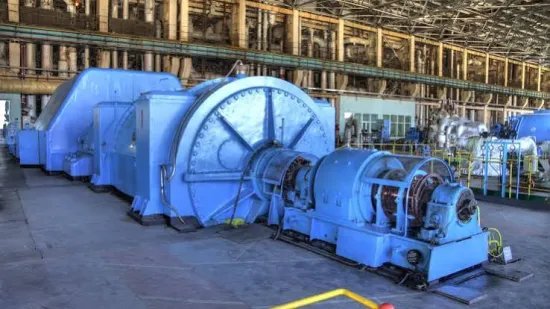
The compromise on the ZNPP issue was not found. The US proposes joint management between Ukraine, the US and the Russians - the three parties receive dividends. The US offers 33% for 33% for 33%. And the Americans are the main manager." Ukraine's compromise proposal: ZNPP is operated jointly by the US and Ukraine - 50/50. However, 50% of the electricity produced is given to Ukraine, and the US independently determines its distribution for another 50%. At the same time, ZNPP, Enerhodar and Kakhovka HPP should be demilitarised.
Paragraph 13
Ukraine and the Russian Federation undertake to implement educational programmes in schools and throughout society that promote understanding and tolerance of different cultures, eliminate racism and prejudice. Ukraine will implement EU rules on religious tolerance and protection of minority languages.
Paragraph 14
Territories. The clause is inconsistent and has several options for solution.
Option 1. «We stand where we are». In Donetsk, Luhansk, Zaporizhzhia, and Kherson regions, the line of deployment of troops as of the date of this agreement is the de facto recognised line of contact, which will be controlled by international forces.
Option 2. Establishment of a potential free economic zone in Donbas, which provides for the demilitarisation of the area. Ukraine is against the withdrawal of its troops, but if this option is implemented, it is in favour of a mirror withdrawal of forces, including Russian forces. This option requires a national referendum in Ukraine to ratify the agreement.
Finally, this issue can be resolved at the level of state leaders.
Paragraph 15
After agreeing on future territorial arrangements, Ukraine and the Russian Federation undertake not to change these arrangements by force.
Paragraph 16
Russia will not prevent Ukraine from using the Dnipro River and the Black Sea for commercial purposes. A separate maritime agreement and access agreement will be concluded, covering freedom of navigation and transport. As part of this agreement, the Kinburn Spit will be demilitarised.
Paragraph 17
A humanitarian committee will be set up to resolve open issues. The exchange of all remaining prisoners of war, including those convicted by the Russian system since 2014, as well as the return of all civilian detainees and hostages, including children and political prisoners.
Paragraph 18
Ukraine should hold elections as soon as possible after the signing of the agreement.
Paragraph 19
This agreement will be legally binding. Its implementation will be monitored and guaranteed by the Peace Council, chaired by US President Donald Trump.
Paragraph 20
Once all parties agree to this agreement, a full ceasefire will come into effect immediately.