BlackRock limits withdrawals after surge in investor requests

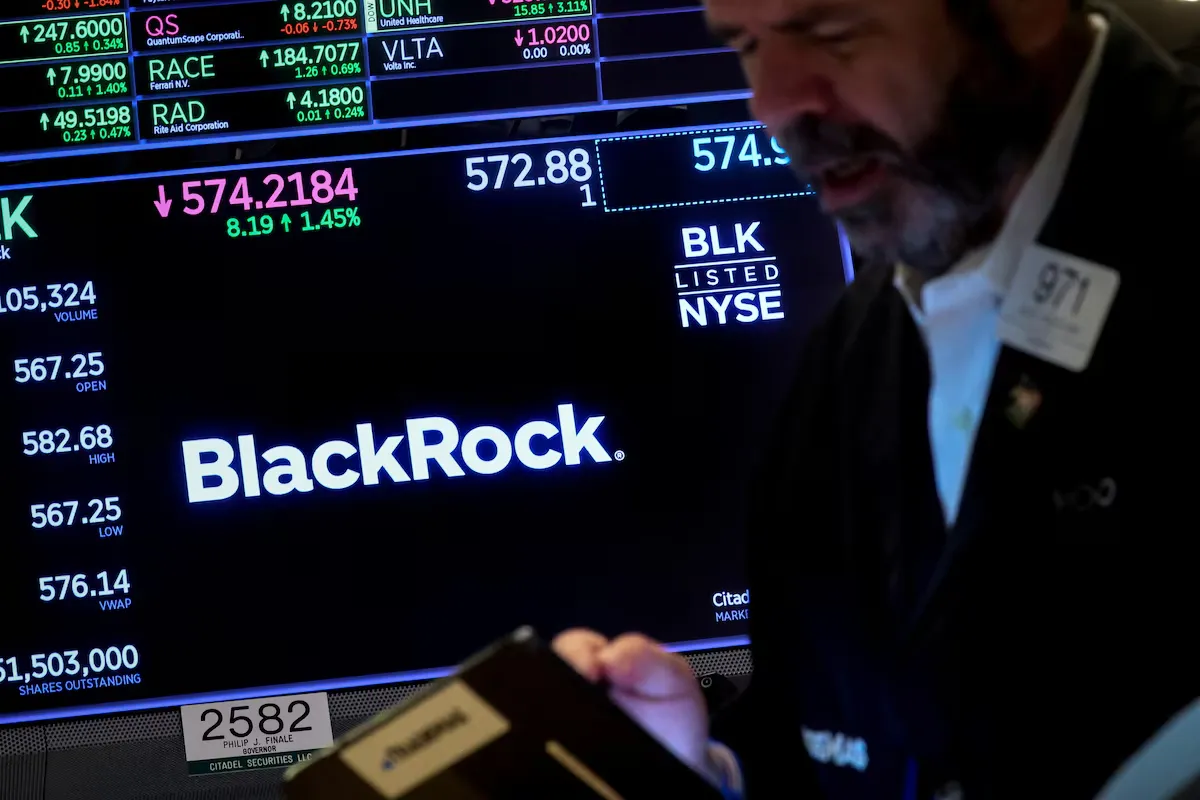
BlackRock announced that it had restricted withdrawals from one of its main debt funds after a sharp increase in requests to redeem investments. The reason was heightened investor concern about the private credit market, which is estimated to be worth approximately $2 trillion.
Shares in the world's largest asset manager fell 6.7 per cent on the New York Stock Exchange. This came amid a broader market decline following worse-than-expected US employment data and the escalation of the war between the US and Israel with Iran.
Sentiment around the private credit market has deteriorated in recent months. Private investors are increasingly applying to withdraw funds from funds, including the $26 billion HPS Corporate Lending Fund, which is open to wealthy private investors.
Morningstar senior analyst Gregory Warren said the situation should serve as a warning to the industry and regulators about the risks of illiquid funds for retail investors.
He said the bankruptcies of a US auto parts supplier and a subprime auto lender last year, as well as the collapse of a British mortgage lender last week, have called lending standards into question.
Earlier this week, a surge in redemption requests prompted Blackstone to raise its standard redemption limit from 5% to 7% in its $82 billion fund. The company and its employees invested $400 million to meet all requests. Blue Owl redeemed 15.4 per cent of one of its funds in January.
The HPS Corporate Lending Fund received $1.2 billion in redemption requests in the first quarter. This is approximately 9.3 per cent of its net asset value.
The fund informed investors that it would pay out $620 million as part of its quarterly redemption. This corresponds to the standard threshold of 5 per cent, after which fund managers can limit further payments.
Blue Owl replaced investor redemptions in one of its funds with promised payments.
Gregory Warren noted that the biggest risk for alternative asset managers is the potential increase in borrower defaults. This could negatively impact investment performance, future capital raising and asset monetisation opportunities.
Fund structure mismatch
The HLEND fund is a business development company that BlackRock acquired along with its management company, HPS Investment Partners, in 2024 as part of a $12 billion deal aimed at expanding into private lending.
Such funds raise capital primarily from retail investors and use it to lend to medium-sized companies. These loans are typically difficult to sell quickly, which creates problems when a large number of investors seek to withdraw their funds at the same time.
BlackRock noted that the 5 per cent limit prevents a structural mismatch between investor capital and the terms of the private loans in which HLEND invests.
Gregory Warren said that such restrictions allow fund managers to avoid forced sales of assets, which could negatively affect returns for investors remaining in the fund.
In the first quarter, new investments in the fund amounted to $840 million. This is less than the $1.2 billion that investors tried to withdraw.
Share of investments in software
The HLEND fund notes that its loans are primarily directed at mature private companies with stable cash flows. These loans are structured to have priority repayment in the event of borrower bankruptcy. The fund also pays dividends on a monthly basis.
According to the company's documents, 19 per cent of HLEND's portfolio is related to the software sector. This sector has recently experienced significant asset sales due to investor concerns about the impact of artificial intelligence-focused start-ups.
Investors are also shifting funds to safer assets amid heightened market volatility. Among the reasons cited are fears of an economic slowdown due to the protracted conflict in the Middle East, technological changes related to artificial intelligence, and the risk of loan defaults.
HPS said in a statement that the current volatility opens up new opportunities for it.