Off the coast of Istad, the coastguard stopped a tanker linked to Russia’s shadow fleet

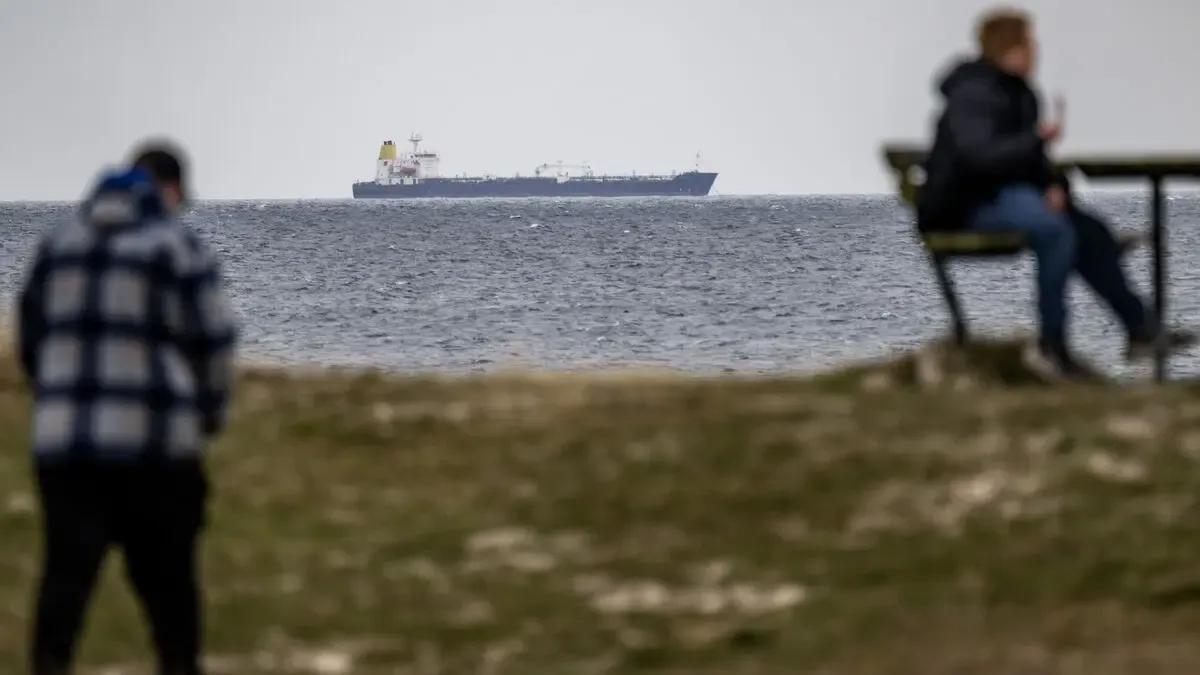
This has been reported by Swedish media, citing the Coast Guard and the TT news agency.
An oil spill in the Baltic Sea east of Gotland was discovered on the morning of 2 April. It was subsequently linked to the tanker Flora 1, and on Friday morning the Coast Guard began inspecting the vessel off the coast of Ystad.
Coastguard spokesperson Mattias Lindholm stated that during the identification of the vessel, it emerged that it is on the EU sanctions list. According to him, there is currently a criminal suspicion of an environmental offence in the case, and further investigation may lead to other suspicions.
According to preliminary data, at least 2,000 litres of oil have spilled into the sea. The tanker itself is to be anchored slightly south of Ystad. No one has been detained so far.
Of particular interest to the Swedish side is the vessel’s flag status. The Flora 1 is registered in Sierra Leone, but the coastguard says there is considerable uncertainty regarding which flag the vessel actually flies and under which jurisdiction it operates.
Sweden’s Minister for Civil Defence, Carl-Oskar Bolin, has already responded to the incident. In a post on X, he stated that the Russian shadow fleet, consisting of old and inadequately insured tankers and used to circumvent sanctions, poses a serious threat to security and the environment.
The Coast Guard itself emphasises that there is no clear definition of what exactly constitutes the Russian shadow fleet, so the agency avoids using this term officially. At the same time, Lindholm acknowledged that the Flora 1 bears the hallmarks of such vessels. These include a dubious flag status, unclear affiliation with the flag state, and other characteristics typical of tankers that Russia uses to circumvent sanctions.
This is the third incident in a month in which the Swedish Coast Guard has stopped a vessel suspected of sailing under a false flag. On 12 March, the police and Coast Guard inspected the tanker Sea Owl near Trelleborg. This vessel is also on the EU sanctions list, and its Russian captain was re-arrested last week on suspicion of using a false document in connection with a serious crime.
Six days earlier, the dry cargo ship Caffa was stopped off Trelleborg. Its Russian captain is also in custody on suspicion of the same offence.
The article explains separately that a significant proportion of vessels in global maritime traffic sail under so-called flags of convenience. This means that a vessel is registered not in the country where its owner is based, but in another jurisdiction, often to circumvent regulatory requirements, taxes and labour costs. Such schemes have existed for centuries, and flag-of-convenience countries allow an unlimited number of foreign vessels to be registered.
With the expansion of Russia’s shadow fleet, an increasing number of tankers sailing to and from Russian ports are being registered in places such as the Cook Islands, Gabon, Cameroon, Palau, Vietnam, and Saint Kitts and Nevis. The International Transport Workers’ Federation (ITF) lists a total of 42 countries or territories as flag-of-convenience jurisdictions.