Ukraine's shadow economy: where and how are funds leaking from the budget?

Reducing budget losses from illegal schemes in the economy is one of the key requirements of the IMF. However, despite the close attention of international experts, politicians and government officials, the level of shadow economy in most sectors of the economy is growing rapidly. According to estimates by ISET and CASE Ukraine, the share of the shadow economy currently reaches up to 40%.
According to MP Danylo Getmantsev, the situation has deteriorated significantly over the past year.
"Among last year's disappointments, I would include a certain slowdown in the process of de-shadowing. 2024 was exemplary in this regard, as we exceeded the budget by $2.5 billion and achieved de-shadowing results in all sectors of the economy. Unfortunately, last year we saw a setback in the tobacco industry, and we have a completely incomprehensible situation in the alcohol market, but the most glaring situation is in the retail and electronics markets," the parliamentarian notes.
Restaurants, cigarettes, gadgets: where the budget loses the most
Experts believe that the biggest budget losses are concentrated in three sectors: tobacco, food retail, and the technology and electronics market.
An analysis of the household appliances and electronics market shows that in 2025, revenues and tax revenues in this sector increased. However, a number of chains have abnormally low tax burdens and minimum wages for employees. This indicates systematic tax evasion.
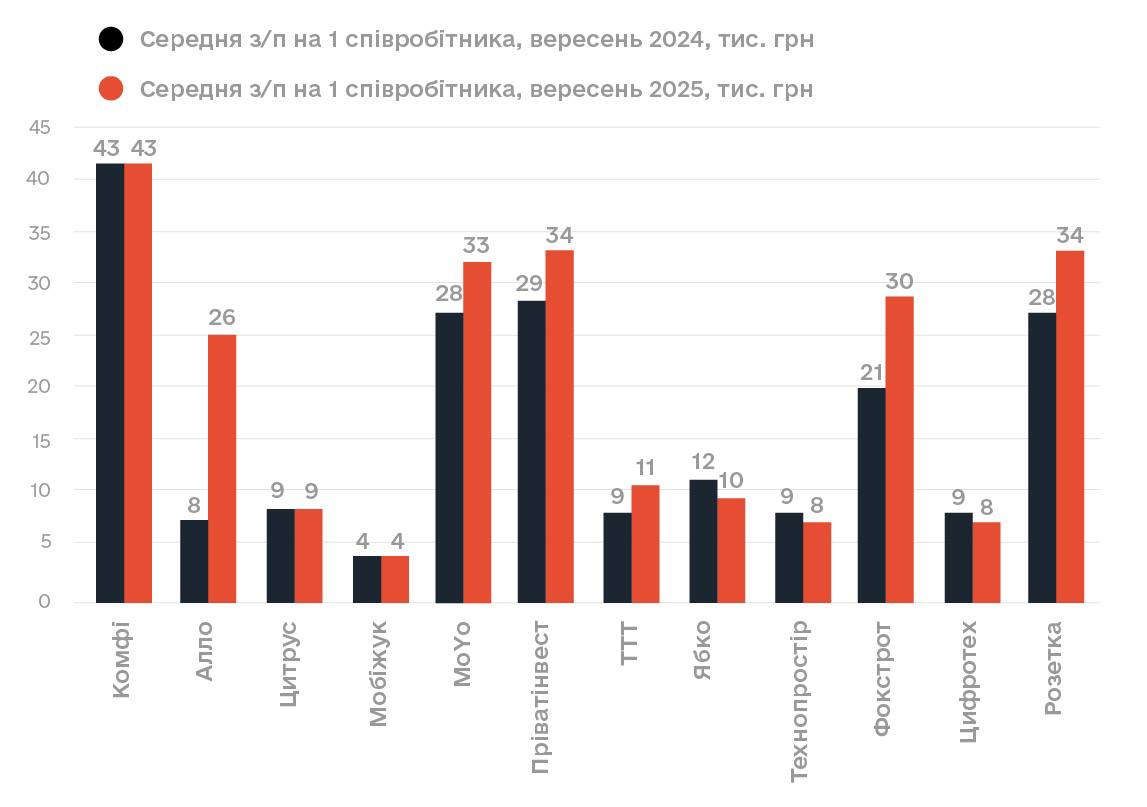
Data source: calculations by experts from the Economic Expert Platform
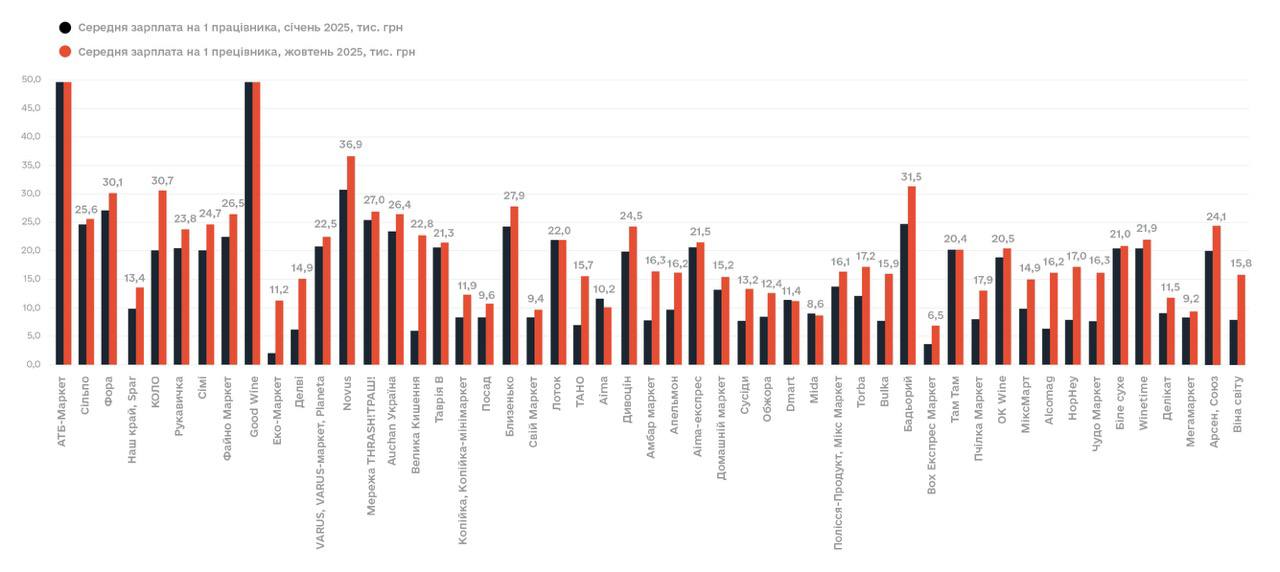
A similar situation is observed in food retail. Budget losses from business "fragmentation" schemes in this industry alone amount to UAH 2.5-4 billion per year. The state loses up to UAH 40 billion due to the payment of minimum official salaries in combination with "envelopes" and the use of undeclared labour.
The latest Kantar research shows that the shadow segment of the tobacco market is growing. At the end of 2025, the share of illegal products reached 17.8%, while at the beginning of the year, law enforcement agencies managed to reduce this figure from a record 25% to 14.2%.
Under these conditions, the annual losses to the state budget due to non-payment of taxes are estimated at UAH 26.5 billion.
Evasion or optimisation: what schemes do businesses use?
Amid growing tax burdens and regulatory pressure, some businesses are adapting to new rules faster than the state can update them. At the same time, basic tax evasion schemes have remained virtually unchanged for decades.
Salaries "in envelopes"
A separate category of the shadow economy is "envelope" salaries. They reduce tax revenues and remove part of the earnings from official accounting. The highest level of shadow employment is recorded in the hotel and restaurant business, as well as in construction and trade. In the HoReCa sector, the level of informal employment reaches 40%, in construction – 38%, and in trade – 32%.
Business fragmentation
The practice of dividing the activities of large companies among dozens of sole proprietorships in order to use a simplified taxation system may appear to be legal. However, without economic justification and proper documentary evidence, such a model carries the risk of fines and criminal liability.
According to experts, such schemes cause the budget to lose up to UAH 25–32 billion annually.
Smuggling
According to MP Danylo Getmantsev, the state loses about UAH 20 billion a year from shadow smuggling of electronics alone, half of which is accounted for by illegal Apple products.
However, the problem exists not only in the gadget market, but also among other groups of consumer goods, as well as in the excise industry.
Illegal production of excise goods
The illegal tobacco market in Ukraine has been a serious problem for many years. Despite some success in combating the "shadow" market in 2024, it showed growth again at the end of last year.
According to Kantar experts, in February 2025, the structure of the illegal market was as follows: counterfeit products - 7%, duty-free products or products intended for export that are illegally sold in Ukraine - 6.4%, contraband - 0.6%.
The latest increase in excise duties has further increased the marginality of illegal production, stimulating not only the release of "off-the-books" products at enterprises, but also the development of so-called garage workshops.
VAT and offshore companies
Despite the reform of VAT administration, the system still has vulnerabilities that allow tax credits to be generated without actually paying tax. In addition, large companies continue to use offshore jurisdictions and transfer pricing. As a result of income tax fraud alone, the budget loses 12-14 billion hryvnia annually, although these losses are gradually decreasing due to currency restrictions and global standards of tax transparency.
Fighting the shadow economy: responsible but ineffective
Experts are convinced that the shadow economy can be overcome through comprehensive institutional reforms and coordinated efforts by the state and business. This involves not only changing the rules, but also their systematic enforcement — from legislation to control in the most risky sectors.
The state has assigned a key role in this to the Economic Security Bureau. In August 2025, Oleksandr Tsyvinskyi was appointed to head the agency. His appointment was supported by international partners and leading Ukrainian business associations, who expected an effective fight against economic crime.
However, so far, the ESBU has not lived up to expectations, and the results of the institution's work have deteriorated significantly.
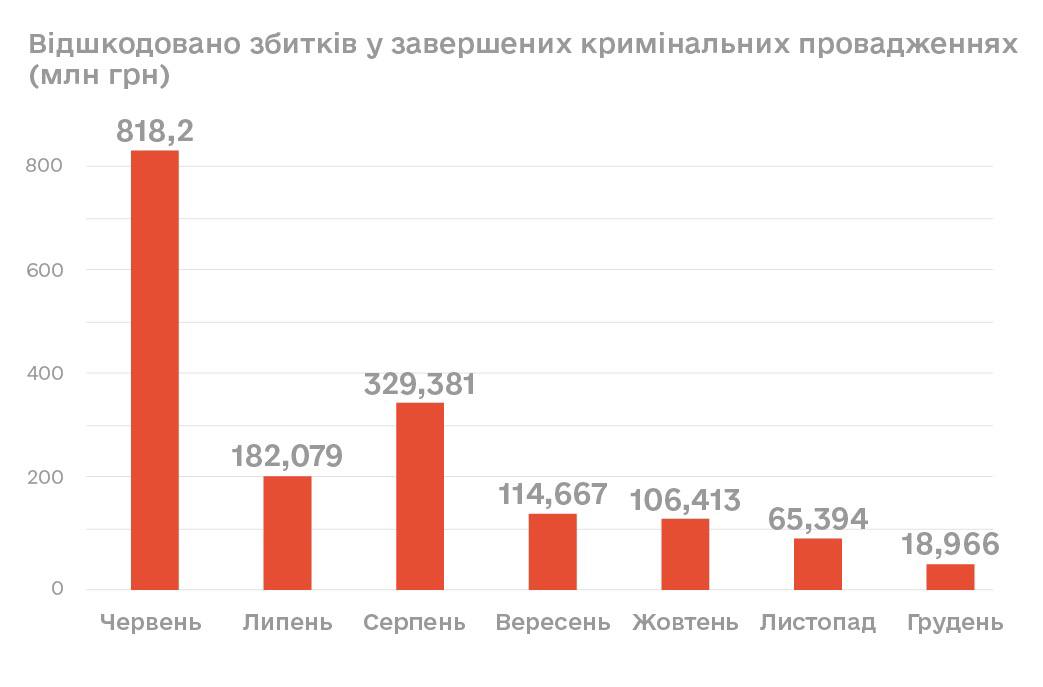
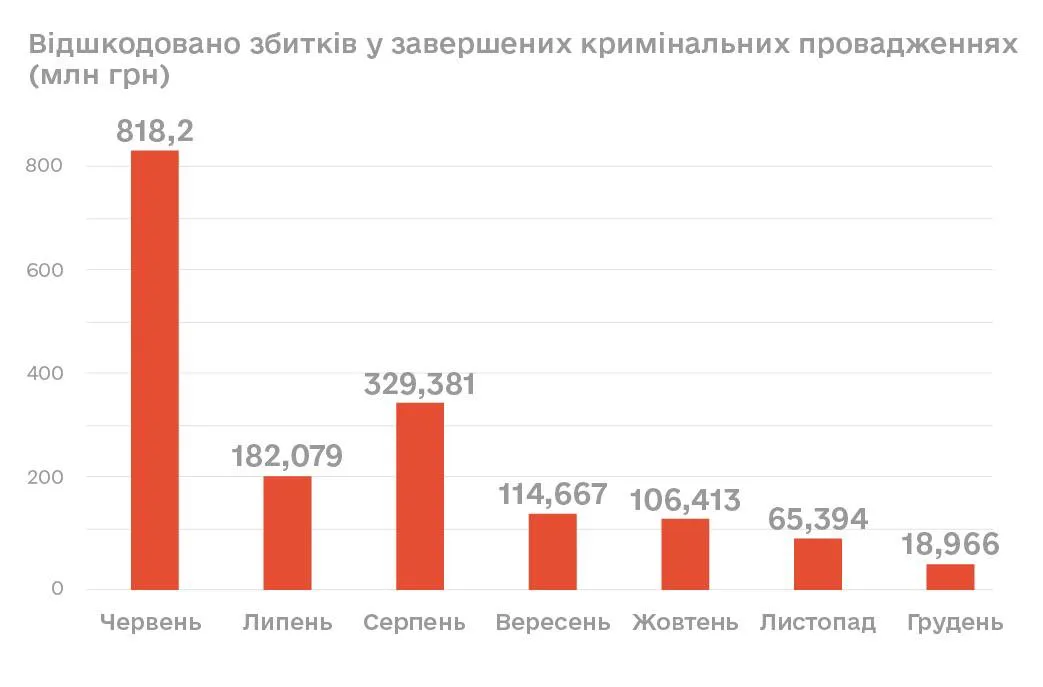
Source: statistics from the Office of the Prosecutor General
In December 2025, ESBU detectives secured the return of only UAH 18.9 million to the budget, the lowest figure for the entire year. In total, between July and December 2025, UAH 816.9 million was recovered in completed criminal proceedings. In the first half of the year, the Bureau reported UAH 3 billion.
The ineffectiveness of the Bureau has already been publicly highlighted by representatives of parliament. In particular, the head of the Tax Committee of the Verkhovna Rada of Ukraine, Danylo Getmantsev, noted in one of his interviews: "There are no results. At the same time, we have certain odious names that are still working in the agency and are associated with various corruption scandals. And why it takes six months to make certain personnel decisions is unclear to us."
Tsivinskyi explains the failure by citing a shortage of personnel. However, during the second half of 2025, the number of employees remained almost unchanged — 1,247 in May and about 1,200 in December. At the same time, the director of the Bureau has not yet begun any significant recruitment or certification of current employees. Instead, he has held dozens of public meetings, interviews and ideas, such as another chatbot.
Maintaining the ESBU costs the budget almost UAH 2 billion per year. The state loses another 100 billion hryvnias due to its inefficiency. In the absence of clear KPIs, timely personnel decisions and a focus on large-scale economic schemes, the agency increasingly resembles an expensive facade of reforms, behind which the systematic dismantling of the shadow economy has not yet begun.